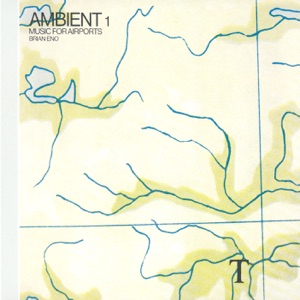
Electronic / Ambient · 1978
Ambient 1: Music for Airports
Brian Eno
Why listen
A piano note fades, and the wait for another becomes part of the experience. These pieces invite attention to spacing rather than a search for the next climax.
Listen and read
Tracks · previews
English editorial edition
Album story
Try listening to “1/1” after a piano note has disappeared. A small sound in the room may become audible before the music returns. Move to “1/2”, and the presence of sustained voices changes the distance around the piano. Music for Airports offers a practical alternative to constant concentration: you can move towards the recording, turn away, and find a place to return without treating distraction as failure.
Released in 1978, the album comprises four pieces. The linked digital sequence is “1/1”, “2/1”, “1/2”, then “2/2”; the similar numbers are worth reading carefully. This is not a collection of aircraft sounds or terminal announcements. Piano, voices and sustained colours occupy space without relying on a familiar chorus as their destination. Nor does listening require you to empty your mind or achieve a prescribed state of calm.
A process still needs a listener
Speaking to Interview in 1978, Eno described overlapping long tape loops in his airport project, but also removing one piano note he disliked. Repetition did not eliminate editorial judgement. A useful listening question follows: does a returning sound seem identical when its surroundings have changed? You need not reconstruct the equipment to notice the distinction between repeating an element and repeating an entire experience.
An intention, not a guaranteed effect
In that conversation, Eno wanted music to improve the uncomfortable airport experience. That is an artistic intention, not evidence that every listener will feel reassured. Quiet sounds can suggest loneliness as readily as rest. At a comfortable volume, try allowing the room to remain audible. A different time of day may change the apparent character of the same recording, without anything in the recorded material having changed.
Give the differences time to emerge
Begin with the clear arrival of a piano note, then compare it with a sound that seems to linger without the same distinct edge. Such contrasts provide movement without an emphatic beat. The 2018 vinyl reissue spread the four pieces over two LPs; that format does not imply newly added compositions. Previews offer a useful introduction to timbre, while the complete pieces give your ear time to become familiar with intervals and returns.
The album through its tracks
Compare the space after the piano in 1/1 with the sustained voices around the piano in 1/2. Short previews cannot convey the full span of the repetitions.
1/1
Pay attention after the piano fades, rather than only when a note arrives. Universal’s 2018 reissue account connects the album to Eno’s wish to alter the airport atmosphere. The useful question for a listener is not whether this track successfully transformed every terminal, but whether music must occupy the centre of attention continuously. Let a sound in your room register, then return to the piano. You have not necessarily missed the point by looking away. The space can feel restful or lonely; neither reaction needs correcting. Listening becomes less a pursuit of the next melodic event than a negotiation between the recording and the place where you hear it.
Reference · Universal Music Canada: 2018 reissue announcement, original concept and four-part programme1/2
Follow the piano, then the sustained voices, and notice what changes when they overlap. Eno’s 1978 interview describes piano and vocal loops in his airport project without naming a track number, so its loop counts should not be treated as a definitive diagram of this piece. The account is more useful as a listening prompt: repeated elements need not make every encounter feel identical. The voices arrive as colour rather than a lyric to decode. Listen to one sound remaining while another begins. A familiar piano detail may acquire a different emotional shading in that company, without a conventional build towards a climax telling you what to feel.
Reference · Interview: Brian Eno interviewed by Glenn O’Brien, June 1978; reprinted 2016
Listen next
Try Aphex Twin’s Selected Ambient Works 85–92 next and notice how a beat changes the bodily experience of repetition. The shared ambient label need not prescribe the same kind of listening.
Selected Ambient Works 85-92 ↗References & editorial note
Written for English readers. Album facts are referenced below; listening suggestions are editorial interpretations. AI-assisted editorial review; not independently human-reviewed.