Folk / Country / Outlaw country & Americana · 1978
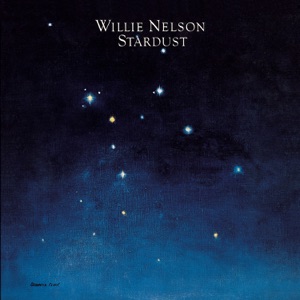
Stardust
Willie Nelson
Why listen
Ten established standards become a particular album through vocal timing and a familiar band, with no new Nelson compositions required.
Listen and read
Tracks · previews
English editorial edition
Album story
On Stardust, Willie Nelson’s identity as a songwriter steps back from the foreground. The ten selections are established songs with earlier interpreters, not a fresh batch of his own compositions. That does not turn the record into an exercise with predetermined answers. From the title track into Georgia on My Mind, follow where a familiar melody begins and how long it travels in this performance.
Booker T. Jones produced the 1978 album. Nelson’s guitar and singing, Bobbie Nelson’s piano and Mickey Raphael’s harmonica bring an existing musical company to the standards. Describing the result simply as a switch from country to jazz misses that relationship. Song choice and the band’s identity act together. Keeping the original ten selections separate from later additions also preserves the programme’s particular starting and finishing points.
The ending has its own arrangement
Jones recalled adding horns to emphasise the coda of Georgia on My Mind. That detail invites attention beyond the familiar opening: an ending can do more than repeat what has already been established. Notice whether the accompaniment supplies a new force and how the singing responds. Another celebrated recording need not become an answer key against which this arrangement is graded.
A pianist can change the group’s pace
Discussing September Song, Jones singled out Bobbie’s piano and her calming effect on the band. Slow songs need not all create calm in the same way. Follow the length of a piano response between sung phrases and how it prepares the next event. Every instrument need not emphasise emotion simultaneously; allowing another performer time is itself a musical action.
Let the complete selection speak
On the Sunny Side of the Street and Don’t Get Around Much Anymore prevent the sequence from becoming an uninterrupted row of slow ballads. By Someone to Watch Over Me, these different movements belong to one singer’s programme. Return to Stardust with that final delivery in memory, and test whether familiarity with individual standards has become familiarity with this particular album.
The album through its tracks
Follow Georgia on My Mind through its ending, attend to the piano in September Song, and continue to Someone to Watch Over Me within the original ten selections.
Georgia On My Mind
Choose the second track’s approximately four-minute-twenty-three-second Nelson album recording. It is distinct from the live duet with Ray Charles played during Jones’s interview. Jones described adding horns to emphasise this studio arrangement’s ending, so keep some attention beyond the instantly recognisable beginning. A familiar composition need not finish in the way memory predicts. When a sung phrase extends, does the accompaniment wait or suggest the next movement first? The song is by Hoagy Carmichael and Stuart Gorrell, not a Nelson original. This selection concerns the choices involved in unfolding known material with a particular band, rather than treating new composition as the only way a singer can make something individual.
Reference · One by Willie: Booker T. Jones firsthand interview and transcriptSeptember Song
This sixth track lasts approximately four minutes and thirty-nine seconds. A seasonal title does not require every listener to recall the same experience. Start instead with the piano playing Jones attributed to Bobbie Nelson. Does it fill time between vocal phrases, or establish the place where the next sentence can begin? Equating slowness with a simple shortage of sound can hide these differences in movement. Compare the longer singing with the shorter instrumental responses. Kurt Weill and Maxwell Anderson’s song also gains a particular scale here between Unchained Melody and On the Sunny Side of the Street. Follow that placement before treating the familiar standard as a self-contained object.
Reference · One by Willie: Booker T. Jones firsthand interview and transcript
Listen next
Continue with Nelson’s Red Headed Stranger to compare a narrative sequence with a collection of standards united through a singer’s interpretation.
Red Headed Stranger ↗References & editorial note
Written for English readers. Album facts are referenced below; listening suggestions are editorial interpretations. AI-assisted editorial review; not independently human-reviewed.
- Willie Nelson official discography: original ten standards, writers and later bonus exclusions · willienelson.com
- One by Willie: Booker T. Jones firsthand interview and transcript · www.onebywillie.com
- Qobuz Legacy/Columbia: same Sony ten-title programme and durations · www.qobuz.com
- Apple Music: selected ten-track Stardust edition · music.apple.com