Folk / Country / Alt-country & the 21st century · 2008
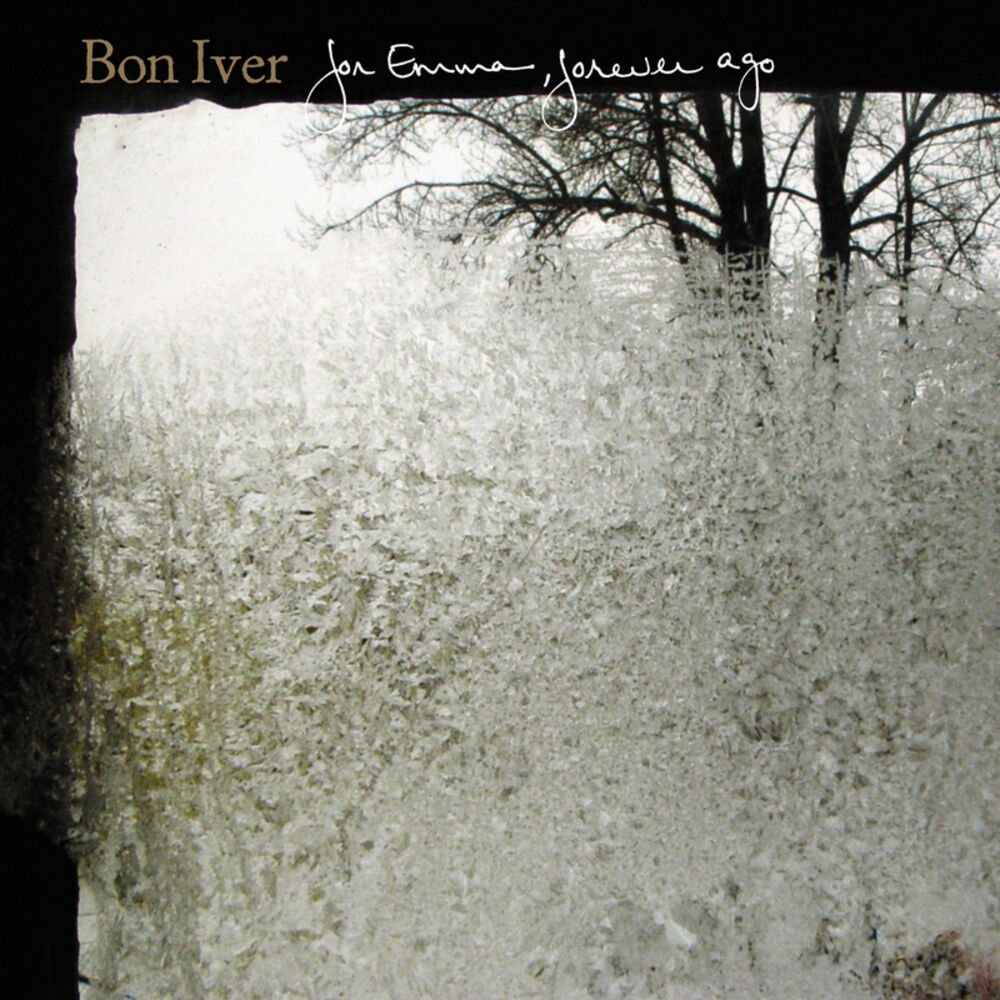
For Emma, Forever Ago
Bon Iver
Why listen
A brief instrumental link, a horn arrangement and a long acoustic finale give the album a more varied design than its cabin story alone suggests.
Listen and read
Tracks · previews
English editorial edition
Album story
Team, the seventh track on For Emma, Forever Ago, lasts less than two minutes. It leads into the horns of For Emma, then the album closes with more than six minutes of Re: Stacks. That sequence changes scale several times: a short instrumental movement, a fuller arrangement and an extended guitar-centred ending. The familiar account of an isolated cabin is only the starting point for understanding such decisions. Modest recording circumstances did not require every song to have the same shape.
Justin Vernon first issued this Bon Iver debut himself in 2007; Jagjaguwar’s wider release followed in 2008. Recording centred on northwestern Wisconsin, with additional work in Raleigh, North Carolina. The credits also name other musicians: Christy Smith on Flume, and John DeHaven and Randy Pingrey playing trumpet and trombone on For Emma. The record’s personal origin should not erase those specific contributions.
The guitar carries the attack
Skinny Love follows Flume and Lump Sum with an especially clear rhythmic outline. The acoustic guitar’s attack and brief resonance give the vocal phrases a physical framework. Changes of pressure can enlarge the song without requiring a larger ensemble. Its compact position near the start also contrasts with the more expansive movement that follows.
Connections of different sizes
The Wolves (Act I and II) contains its two-part design within one track. Creature Fear and Team, by contrast, make a connected passage across separate track numbers. Team gives rhythmic and instrumental movement a brief foreground position before the horn arrangement arrives. Its small duration therefore contributes to the organisation of the surrounding songs.
The biggest arrangement does not finish the record
For Emma opens the instrumental palette, but Re: Stacks does not try to outgrow it. Instead, guitar and singing receive the longest span on the album. Vernon described the record in a contemporary interview as the event of writing music in a particular time and place. The varied arrangements and durations are part of that record of work, beyond any single biographical anecdote.
The album through its tracks
Skinny Love’s guitar attack and For Emma’s horns reveal different ensemble sizes within the same concise programme.
Skinny Love
The third track gives the acoustic guitar a strongly physical role. Its attack and short resonance organise the movement around the singing, making changes of pressure matter as much as the number of instruments. A stronger vocal phrase can therefore expand the apparent scale without a mass of accompaniment arriving beneath it. Following the first two tracks, this compact form becomes a clear early centre. The more extended structure of The Wolves then changes the proportions again. Listeners who first encountered another singer’s interpretation will also find a different instrumental foundation here. This is Vernon’s guitar-based album recording, whose placement within the nine-track sequence is as useful as its familiarity in isolation.
Reference · Bon Iver: official nine-track programme, credits and direct Apple linkFor Emma
The eighth track adds trumpet and trombone, credited to John DeHaven and Randy Pingrey respectively. Those distinct instrumental lines broaden the palette after the brief Team. The arrangement offers a different kind of fullness from layered singing, and the concise running time makes its arrival particularly clear. Yet it is not the final destination of a steadily expanding ensemble: Re: Stacks follows by giving a longer span to guitar and voice. For Emma consequently functions as the last major change of colour before the closing contraction. It also makes the contribution of other musicians tangible within a project often described almost exclusively through the story of Vernon working alone.
Reference · 2008 digital booklet: publicly readable reproduced recording and guest credits
Listen next
Continue with Gillian Welch’s Time (The Revelator) to compare another small ensemble’s organisation of an acoustic album and an unusually extended closing track.
Time (The Revelator) ↗References & editorial note
Written for English readers. Album facts are referenced below; listening suggestions are editorial interpretations. AI-assisted editorial review; not independently human-reviewed.
- Bon Iver: official nine-track programme, credits and direct Apple link · boniver.org
- Bon Iver official Bandcamp: 2008 nine-track edition and full timings · boniver.bandcamp.com
- 2008 digital booklet: publicly readable reproduced recording and guest credits · www.scribd.com
- Identity Theory: Justin Vernon first-person 2008 interview · www.identitytheory.com
- Jagjaguwar: label history and 2007 signing before 2008 album issue · jagjaguwar.com
- Apple Music US: artist-linked Jagjaguwar delivery · music.apple.com