Hip-hop / Golden-age New York · 1991
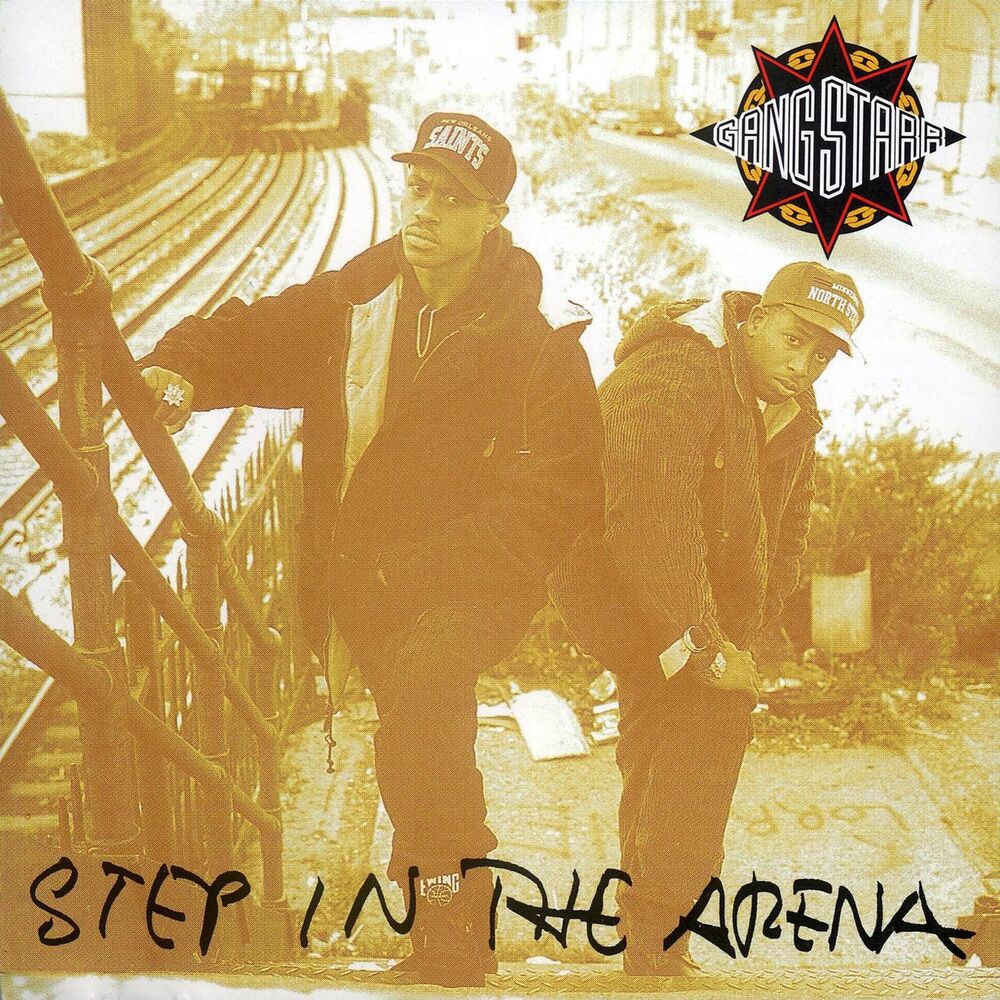
Step in the Arena
Gang Starr
Why listen
Guru’s level delivery and Premier’s sharply framed loops make restraint feel forceful.
Listen and read
Tracks · previews
English editorial edition
Album story
A level voice can exert considerable pressure. On Step in the Arena, Guru rarely needs a dramatic change of pitch to hold the centre of a track. Short recurring sounds and clipped scratches define the space around him. Listen to where a sentence ends against the drums: the appeal is in placement as much as verbal speed.
Released through Chrysalis in 1991, this was Gang Starr’s second album. The partnership places a rapper and a DJ in constant relation. Its jazz associations need not suggest extended instrumental solos behind a vocal. Samples, small pieces of earlier recordings, are repeated as loops; turntable cuts interrupt or reshape those pieces. The voice works within that firm framework, changing the weight and length of phrases rather than constantly changing its register.
One voice, several functions
After the brief Name Tag, the title track opens the contest more fully. Boasts are part of the programme, but Love Sick and Just To Get a Rep give the same vocal presence different jobs: relationship song and street narrative. Keep the shorter Game Plan and Street Ministry in place. Their different scale prevents the eighteen tracks from becoming a uniform procession of full-length statements.
Attend to the interval
Calling this jazz rap can obscure how firm its rhythmic edges are. Rather than treating a sampled sound as a badge of sophistication, learn its recurring shape. Then follow the words that extend beyond it or stop before its return. Guru’s relatively even pitch leaves those small differences exposed. The changing distance between a vocal phrase and the beat provides movement without requiring a large melodic rise.
A route through the record
The linked edition offers eighteen tracks in roughly fifty minutes; its 1990 copyright line should not be confused with the 1991 release date. Follow the voice on one pass, then attend to the spaces it leaves. A scratch can answer a phrase, while an unaccompanied loop can make the next line feel anticipated. Identifying every source recording is optional: recognising how a returning sound prepares your ear is already a useful way into the partnership.
The album through its tracks
Follow the gap between the end of each phrase and the drum pattern.
Who's Gonna Take the Weight?
The clipped horn figure offers a rhythm alongside the rap. In an interview conducted in 2001 and published in 2016, Premier recalled repeatedly cutting that loop; this is retrospective testimony, not a contemporary review. Cutting here means manipulating a recorded fragment with the turntable to shape its rhythm. Follow Guru first, then count the short interventions around him. Near the later part of the track, shift your attention towards the DJ work. What initially seemed an embellishment can register as a separate performance. The useful comparison is between the duration of each fragment and the silence beside it: a small piece can change character without becoming a long melody.
Reference · Brian Coleman: DJ Premier interview conducted in 2001, published in 2016 on DJ Premier BlogJust To Get a Rep
A recurring backing and an understated voice give this street narrative a watchful tension. Premier later recalled that it was completed last but issued as the album’s first single. Recording order and release order were different. Rather than assuming the robbery story is simply a boast by its narrator, follow the consequences of pursuing a reputation. Notice how little Guru needs to alter his vocal register as the scene develops. The backing circles while the account advances, making repetition feel like a situation that is difficult to escape. On a second pass, attend to pauses between phrases: the story remains legible without a succession of exaggerated character voices.
Reference · Brian Coleman: DJ Premier interview conducted in 2001, published in 2016 on DJ Premier Blog
Listen next
Compare Paid in Full for another relationship between a low vocal register and repeating accompaniment.
Paid in Full ↗References & editorial note
Written for English readers. Album facts are referenced below; listening suggestions are editorial interpretations. AI-assisted editorial review; not independently human-reviewed.