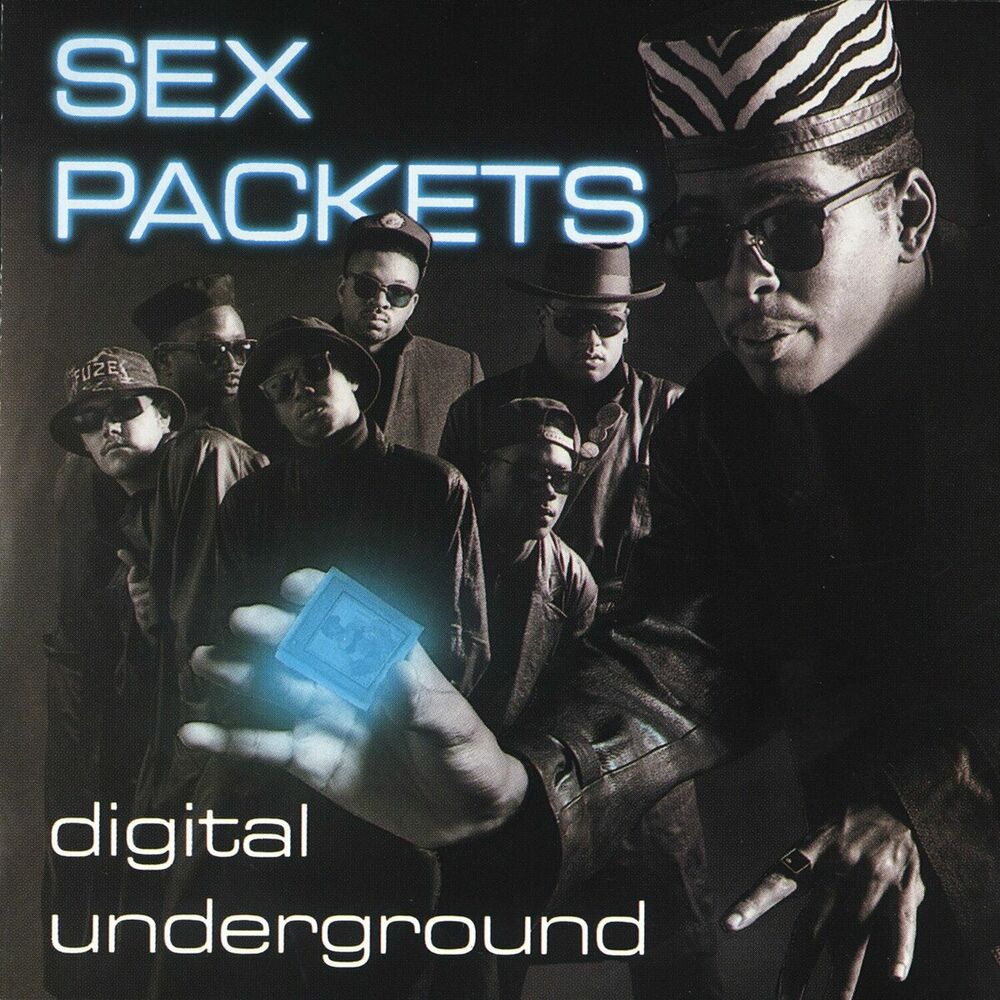
Hip-hop / Alternative & jazz rap · 1990
Sex Packets
Digital Underground
Why listen
Funk repetition becomes a stage for rap voices, invented identities and comic scenes.
Listen and read
Tracks · previews
English editorial edition
Album story
The move from Doowutchyalike into Packet Prelude changes what a party record can do. A long groove gives way to a short scene, and the fictional world of Sex Packets comes into focus. Listen to the timing that joins them: rap, comic speech and dance rhythms can occupy the same musical space without serving exactly the same purpose.
Digital Underground’s 1990 debut presents the Bay Area collective around Shock G through songs and staged encounters. Humpty Hump is a persona performed by Shock G, not a separate person whose boasts should be read as documentary evidence. The title’s supposed product is fictional too: an imagined means of supplying sexual experiences. That adult comic premise gives the later tracks a shared setting.
Follow the fourteen-track programme
The chosen standard digital edition has fourteen tracks; it is not a universal programme for every original format. The Humpty Dance opens the route, followed by different uses of funk rhythm in The Way We Swing and Rhymin’ on the Funk. Later, the transition into Packet Prelude leads towards the title’s invented product and the scenes surrounding it. Keep those shorter passages in the sequence. They can prepare the next encounter instead of merely separating songs.
A collective, with characters
Listen to emphasis and pauses as closely as to rhymes. A speaker can establish an identity by taking up space, interrupting an expectation or allowing another voice into the performance. The collective also matters beyond Shock G’s personas. His later interview distinguishes the debut-era participants from subsequent arrivals. The group’s association with Tupac belongs to a broader history and should not be turned into a claim that he raps on this album.
Timing is the connection
The explicit humour is part of the album’s character, not something to erase by calling it merely cheerful. Equally, a fictional performance need not be mistaken for a personal admission. On one pass, follow the bass and drums through the changes of voice. On another, attend to where a sentence ends and a response arrives. The space needed for a joke can overlap with the space that keeps a groove moving. That relationship helps the record sustain more than its most recognisable character.
The album through its tracks
Compare the opening persona with the sequence beginning at Packet Prelude, keeping the rhythm in view throughout.
The Humpty Dance
Treat Humpty Hump as a role and the song becomes an exercise in creating a person through sound. Shock G’s performed confidence depends on emphasis, pauses and the way a phrase occupies the repeated backing. First follow the bass and drums without concentrating on the jokes; then reverse your attention. The words do not float independently of the groove. Their timing contributes to the character’s exaggerated self-possession. You can hear that relationship without using the costume or video as your main guide. As the opening track, the performance also establishes permission for the album’s later inventions. Use the album version rather than a radio edit for this comparison.
Reference · NPR / Rodney Carmichael: Shock G and the Humpty Hump personaDoowutchyalike
A longer party track invites attention to movement within a repeating framework. Listen for the shifts between an individual voice taking the foreground and a more collective sense of invitation. These are not entirely separate functions: an address to the crowd can also become a rhythmic event. In the standard fourteen-track sequence, the song sits immediately before Packet Prelude, giving it a different role from the one it has as an isolated single. Follow one element of the backing throughout, then listen again for changes of speaker. Does repetition merely extend the duration, or create room for different kinds of participation? The transition into the following track offers another perspective.
Reference · Apple Music: fourteen-track edition
Listen next
Set it alongside People’s Instinctive Travels and the Paths of Rhythm for another form of humour and collective identity in 1990 hip-hop.
People's Instinctive Travels and the Paths of Rhythm ↗References & editorial note
Written for English readers. Album facts are referenced below; listening suggestions are editorial interpretations. AI-assisted editorial review; not independently human-reviewed.
- Tommy Boy / Reservoir official anniversary release link · link.tommyboy-records.com
- Apple Music: fourteen-track edition · music.apple.com
- Apple Music: 2026 nineteen-track deluxe · music.apple.com
- Shock G 2008 interview, published in 2021 by original interviewer Todd Davis · westcoaststyles.com
- The Awl reproducing Shock G 2010 Vibe testimony on fictional concept · www.theawl.com
- KQED: Shock G memoir and persona context · www.kqed.org
- NPR / Rodney Carmichael: Shock G and the Humpty Hump persona · www.nprillinois.org