Jazz / Brazilian & Latin jazz · 1964
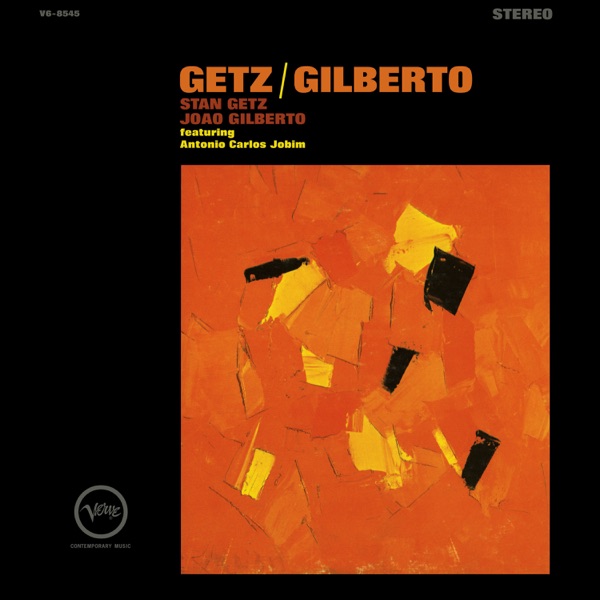
Getz/Gilberto
Stan Getz & João Gilberto
Why listen
Quiet voices, lightly articulated guitar and a more expansive tenor saxophone retain distinct personalities. Beneath the relaxed surface, the placement of words and accents rewards close attention.
Listen and read
Tracks · previews
English editorial edition
Album story
The singing stays quiet, yet the ends of phrases linger. Guitar keeps the music moving with a small sound; the saxophone then seems to widen the same room. Getz/Gilberto draws attention through distance and contrasting ways of phrasing rather than a succession of large climaxes.
Stan Getz and João Gilberto recorded together in New York in March 1963; the album appeared in 1964. Antônio Carlos Jobim’s compositions and piano, and Astrud Gilberto’s vocals, also matter. The two surnames in the title do not describe every important contribution. Rather than imagining an American saxophonist inventing a Brazilian sound, listen to the meeting with an already developed repertoire and way of playing.
A small guitar sound with a large role
Before following the familiar melody or saxophone tone, stay with the guitar. Recurring accompaniment contains accents against which vocal entries find their own places. Rhythm need not be struck hard to move a listener. Calling bossa nova merely a relaxing atmosphere can conceal this detail. Thinking instead of considerable activity at modest volume opens an approachable route into the record, without requiring a technical lesson in rhythm.
Different ways of speaking
João’s singing, Astrud’s voice and Getz’s saxophone establish different distances around the songs. Rather than choosing the most expressive participant, compare shorter statements with longer ones. Following Jobim’s piano can reveal the spaces between the more familiar foreground voices. Ensemble playing does not require everyone to resemble one another. Distinct sounds can remain themselves while allowing a song to move naturally from one presence to the next.
From a recognised song to an album
At the 1965 Grammys, Getz/Gilberto received Album of the Year and “The Girl from Ipanema” Record of the Year. These are documented points of American reception, not a measure of Brazilian music’s entire worth. If the opening song brought you here, continue into the remaining programme. Comfortable familiarity can become active listening through a small change of attention. Turning up the volume is less important than following one player for a while and hearing what surrounds them.
The album through its tracks
Follow the guitar’s recurring accents and the placement of the voices. Compare the two songs without waiting only for a familiar refrain.
The Girl from Ipanema
Its 1965 Record of the Year Grammy provides a concrete sign of the recording’s public reach. The award does not explain everything attractive about the performance. In the album version, follow the passage between Portuguese and English voices, guitar and saxophone. Familiar melody can feel different as the length and placement of words change. Ipanema need not become merely a vague holiday image: Brazilian songs and musicians are central to this encounter. A song first heard as comfortable background can return as a meeting of distinct ways of speaking. If you know an edited single or another singer’s version, the album sequence itself offers something new to hear.
Reference · Recording Academy: 1965 awardsCorcovado
Jobim’s archive records Astrud Gilberto’s participation here as well as on the opening song. This makes a useful opportunity to hear beyond the most famous encounter. Follow the space before and after a vocal entry while the guitar maintains its movement. Expression need not depend on inflating a quiet phrase into a large gesture. The album’s awards should not be recast as this track’s separate achievements. Instead, use the song to resist treating everything after a hit as interchangeable atmosphere. Differences in phrase endings and instrumental prominence remain available within the familiar calm. Listening closely to the distance between voice and guitar can make modest volume feel richly detailed.
Reference · Instituto Antonio Carlos Jobim: original album archive
Listen next
Buena Vista Social Club offers voices and acoustic rhythms from a different regional tradition. This is not an equation of Cuban and Brazilian music, but a way to extend attention to small differences in ensemble playing.
Buena Vista Social Club ↗References & editorial note
Written for English readers. Album facts are referenced below; listening suggestions are editorial interpretations. AI-assisted editorial review; not independently human-reviewed.