Japanese Music / New music, city pop & soul · 1977
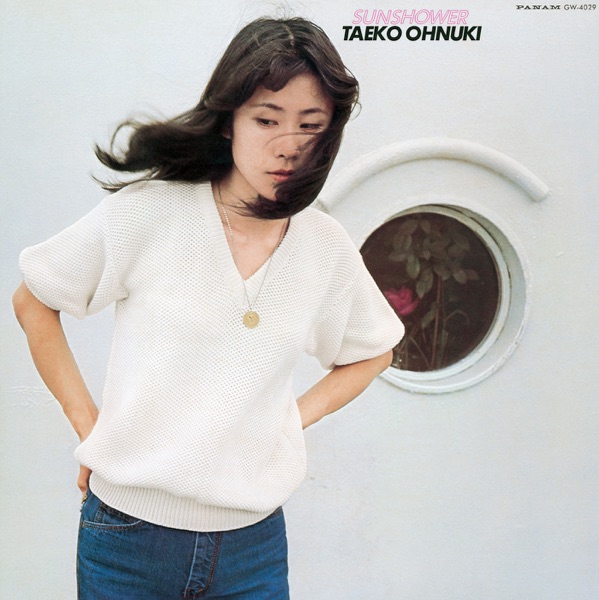
SUNSHOWER
Taeko Onuki
SUNSHOWER · 大貫妙子
Why listen
A light vocal presence can leave a busy arrangement sounding both inviting and distant.
Listen and read
Tracks · previews
English editorial edition
Album story
SUNSHOWER can seem welcoming before the relationship between voice and accompaniment becomes less settled. Taeko Onuki does not need to overpower the ensemble to draw attention. Follow a moving bass part, a short guitar gesture or a keyboard colour, then return to the vocal. The space around that voice can change the scene without changing its volume.
Onuki’s second solo album appeared on25 July1977. Her official credits distinguish producers Seiji Kuniyoshi and Aki Ikuta, co-producer Onuki, and Ryuichi Sakamoto’s musical direction and arrangements. A famous collaborator’s name should not replace that division of work. The final song, Furiko no Yagi, joins Onuki’s words to Sakamoto’s music. The linked edition keeps the original ten-song sequence, separate from later CD bonuses and alternate single recordings.
Listen to what surrounds a line
When the singer holds a note, choose a lower movement that continues beneath it. Returning to the melody afterwards may make it seem nearer or farther away. Arrangement is more than decoration here: the amount of room occupied by each part helps establish a relationship around the singer. You need not name every instrument. Remember one strand and alternate attention between it and the vocal sentence.
Beyond the city in a title
Tokai provides an entrance without requiring every song to illustrate a night-time street. Hear the path from Summer Connection through Sargasso Sea to the closing track. The mixture of English and Japanese titles does not prescribe a single mood. City pop is a useful present-day route to the record, but its later circulation should not be confused with the moment it was made. A listener need not have inhabited a particular city to find a scene within these musical distances.
Stay longer than the credits
Recognising several musicians does not mean their interaction has already been heard. Compare the rhythm players shared by the two featured songs, then notice what changes when another instrumental colour appears above them. If one track catches your attention, include its neighbours on the next visit. Instead of retaining a bright fragment as the album’s complete image, experience ten songs changing density and shade. Those differences remain available regardless of the label through which you first encountered the music.
The album through its tracks
Compare Tokai and Kusuri wo Takusan, attending to different wind colours around shared rhythm players.
都会
The title Tokai identifies a city without requiring a glamorous picture. Begin with the distance between the vocal and its backing. The official track credits identify Haruomi Hosono on bass, Chris Parker on drums and Yasuyuki Shimizu on soprano saxophone. Having checked those names, follow the low movement once and the ends of vocal phrases on another pass. Do the parts seem to express the same feeling, or can an inviting accompaniment leave the voice slightly apart? Keep that question open. This is track four, between Nanimo Iranai and Karappo no Isu. Restoring those neighbours allows a familiar song to take its place within the album rather than stand for all of it.
Reference · Taeko Onuki official: original date, album and track personnel, bonus distinctionsくすりをたくさん
Compare the light flute colour with the movement below it. The track credits name Masami Nakagawa on flute alongside Hosono’s bass and Parker’s drums. Kusuri wo Takusan refers to medicine in its title, but the song should not become practical advice or a diagnosis of the performer. Hear the distance between its imagery and the musical movement instead. Choosing a higher instrumental line on one pass and a lower repeating part on another can place the same vocal against a different apparent background. Remember the opening Summer Connection as you enter this second track, then compare Tokai later. Shared rhythm players do not prevent a change of character when the surrounding colours and phrases change.
Reference · Taeko Onuki official: original date, album and track personnel, bonus distinctions
Listen next
Try Minako Yoshida’s FLAPPER for another relationship between a singing voice and its ensemble.
FLAPPER ↗References & editorial note
Written for English readers. Album facts are referenced below; listening suggestions are editorial interpretations. AI-assisted editorial review; not independently human-reviewed.
- Taeko Onuki official: original date, album and track personnel, bonus distinctions · onukitaeko.jp
- Taeko Onuki official English discography: original romanized titles and credits · onukitaeko.jp
- Crown official news:2019 worldwide distribution and later vinyl reissues · www.crownrecord.co.jp
- Apple Music Japan: original ten-song programme · music.apple.com