Film music / European auteur cinema · 1984
Once Upon a Time in America
Ennio Morricone
Once Upon a Time in America · 엔니오 모리코네
Why listen
A melody returns with the weight of having been heard before, making the album an exercise in musical memory.
Listen and read
Tracks · previews
English editorial edition
Album story
The strings open a broad space, and a melody takes its time crossing it. Rather than constantly urging the listener towards another event, this music encourages a phrase to remain in the mind. A later return can feel different precisely because the tune is already familiar. That change is a useful entrance to Once Upon a Time in America.
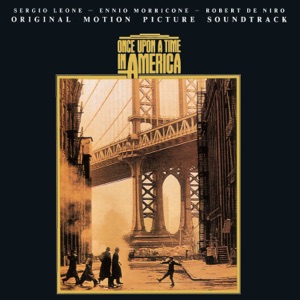
Ennio Morricone wrote the music for Sergio Leone’s 1984 film about friendship, crime and remembered lives in New York. The linked Mercury/UMG release is the fifteen-track original motion picture soundtrack, distinct from later concert recordings and expanded editions. Its sequence is an album programme, not a chronological index to every scene or a complete presentation of all music in the film.
Shorter pieces change the surroundings
Poverty and Childhood Memories contribute to a sequence that also includes Prohibition Dirge and Speakeasy. Those changes of character keep the record from becoming one uninterrupted lyrical mood. Notice Friends returning, and Amapola appearing in two parts. Recognising a name or a musical idea makes the listener draw on something already heard, even without recalling a particular scene. Give the shorter selections attention rather than treating them as intervals between famous themes.
Do not let beauty settle the question
Deborah’s Theme gives a phrase room to rise and subside. Follow its long line before deciding what emotion it represents. A graceful sound need not certify a character’s goodness or happiness, especially within this film’s troubled world. Someone unfamiliar with the story can still compare the melody’s movement with the accompaniment beneath it. The time taken to reach a resting point is worth hearing in itself.
Return through the ending
The final Deborah’s Theme / Amapola brings familiar names into a combined track. Hear it as an opportunity to compare what the album has accumulated, rather than as an explanation of the film’s ending. You might first compare track three with this conclusion, then return to the full sequence. Hearing a beautiful theme in isolation and meeting it again among contrasting pieces are different experiences; the latter is a reason to explore the soundtrack as an album.
The album through its tracks
Remember Deborah’s Theme, then compare its place near the start with the combined track at the end.
Deborah's Theme
Follow the melody as it opens out, then notice how long it allows a phrase to remain before moving on. On a second pass, concentrate on the string accompaniment rather than the leading line. This is track three in the linked programme; its name returns in the final combined selection. A theme associated with a character does not necessarily describe each action that character takes. Without knowing the story, a listener can still hear ascent, relaxation and the wait for a resting point. Once the immediate beauty registers, keep listening: does that extended space feel reassuring, or does it leave something unresolved for you?
Reference · Apple Music: Mercury/UMG original soundtrack, fifteen tracksCockeye's Song
Separate the breath-shaped pan flute line from the broader accompaniment around it. Following the contour and listening to the surface of each note offer different routes into the same melody. In this fifteen-track programme, the selection sits between Prohibition Dirge and Amapola (Part 2), adding another colour to the sequence. Recognising the instrument is only a beginning: notice how close to the background it seems, and how far it appears to stand in front. There is no need to reveal the named character’s fate to explore that relationship. Listen once for phrase endings, then for what remains behind them when the melody pauses.
Reference · SoundtrackCollector: original and expanded editions, credits
Listen next
The Godfather offers another way for a beautiful theme within a crime film to evoke people and their past.
The Godfather ↗References & editorial note
Written for English readers. Album facts are referenced below; listening suggestions are editorial interpretations. AI-assisted editorial review; not independently human-reviewed.
- Apple Music: Mercury/UMG original soundtrack, fifteen tracks · music.apple.com
- Qobuz: original soundtrack credits and programme · www.qobuz.com
- BFI Southbank: 2021 programme notes, film and memory structure · bfidatadigipres.github.io
- SoundtrackCollector: original and expanded editions, credits · www.soundtrackcollector.com