Pop / 1980s pop highlights · 1986
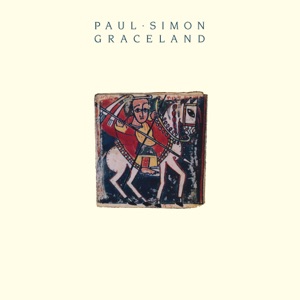
Graceland
Paul Simon
Why listen
Named collaborators shape rhythm and vocal construction throughout the album, while its musical achievement remains inseparable from a disputed historical setting.
Listen and read
Tracks · previews
English editorial edition
Album story
Graceland becomes more specific when it is heard through the musicians who make its arrangements work. Guitar patterns, mobile bass lines, group singing and different ensemble traditions do not simply decorate Paul Simon’s songs. They help determine the forms those songs take.
The focus is the original eleven-track programme from 1986. The linked Sony-authorised release carries a 2012 rights date; demos, unreleased versions and other anniversary additions are excluded. Recording in South Africa generated controversy over the anti-apartheid cultural boycott. Listening closely to the music does not require treating commercial success as a settlement of that dispute.
Names make musical differences clearer
General M.D. Shirinda and the Gaza Sisters appear on I Know What I Know, while the Boyoyo Boys participate in Gumboots. These are identifiable contributors, not an anonymous regional colour. Compare how rhythmic movement and vocal exchange work from song to song. Calling everything a single African sound would obscure the differences that make the album interesting. Simon’s recurring presence connects performances without making their musical sources interchangeable.
Group singing changes the architecture
Diamonds on the Soles of Her Shoes establishes a vocal design before the band’s fuller movement enters. Homeless gives Ladysmith Black Mambazo’s singing an even more central role. Compare those functions instead of treating both as memorable choral effects. Joseph Shabalala’s creative credits matter here: the official listing names him with Simon for the beginning of Diamonds and as co-writer of Homeless. The distinction helps keep collaboration concrete rather than merely celebratory.
Enjoyment does not erase the dispute
Anti-apartheid organisations criticised Simon’s visit as a breach of collective cultural pressure; he defended the project as a way of showcasing Black South African musicians. Those positions cannot be reconciled simply by pointing to an enjoyable record. The later contributions of Good Rockin’ Dopsie and the Twisters and Los Lobos also widen the album beyond a single geographical description. Hear the original eleven tracks through these specific relationships, with their differences still intact.
The album through its tracks
Compare the vocal introduction and band entrance in track five with the voice-centred design of track eight. Keep the collaborators’ names attached to their songs.
Diamonds On the Soles of Her Shoes
The roughly five-minute-fifty-one-second album version begins by establishing a design through group singing. Follow that opening before attending to what changes when the band’s fuller movement enters. Treating the introduction as decoration would miss part of the song’s construction. The official credit specifically names Simon and Joseph Shabalala for the beginning; it should not be enlarged into an unsupported statement about equal shares in the whole composition. Compare the track with Homeless, where group singing retains a different central function. The contrast offers a concrete way to hear collaboration: the voices do not merely add colour but alter the route through the song.
Reference · Paul Simon official: Diamonds opening co-creditHomeless
The eighth track is co-written by Simon and Joseph Shabalala and centres Ladysmith Black Mambazo’s singing. Instead of waiting for an instrumental solo, follow the relationship between the lower foundation, the more prominent line and the answering parts. Several vocal layers need not be doing the same job. Hear this as a particular group’s and particular writers’ construction, rather than a representative sample of an entire continent. Its position between Under African Skies and Crazy Love, Vol. II also matters. The album creates concentration through a different organisation of sound here, rather than maintaining the same instrumental propulsion from beginning to end.
Reference · Paul Simon official: Homeless co-writing credit
Listen next
So provides a comparison in how collaborators materially change songs released under a prominent solo artist’s name.
So ↗References & editorial note
Written for English readers. Album facts are referenced below; listening suggestions are editorial interpretations. AI-assisted editorial review; not independently human-reviewed.
- Paul Simon official: album sequence and reissue extras · www.paulsimon.com
- Paul Simon official: Diamonds opening co-credit · www.paulsimon.com
- Paul Simon official: Homeless co-writing credit · www.paulsimon.com
- Anti-Apartheid Movement archive: contemporary boycott protest · www.aamarchives.org
- Apple Music: original eleven-track programme and current rights · music.apple.com