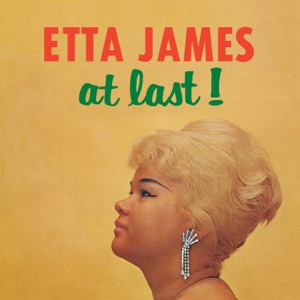
Soul / R&B / From rhythm and blues to soul · 1960
At Last!
Etta James
Why listen
A smooth arrangement need not smooth away the singer. Compare the title ballad with a more insistent performance and follow the texture that remains recognisably James.
Listen and read
Tracks · previews
English editorial edition
Album story
When the strings open At Last, wait for the texture of the voice entering their space. The accompaniment and singer need not share the same surface. James can hold a note, shorten a word, or make a phrase feel newly urgent. Even if the song is familiar from a ceremony or a film, romance need not be your only way into the album. Place I Just Want To Make Love To You beside it and hear the same voice move differently.
Interscope dates the original debut LP to 1960; the Recording Academy’s 1961 designation concerns the title single. The ten-song LP programme runs from Anything To Say You’re Mine to Girl of My Dreams. The linked Apple edition preserves that sequence, then adds four selections with Harvey Fuqua. Try pausing after track ten before exploring those additions: the end of the LP and the end of this fourteen-track stream are different places. A later rights notice is not the recording date.
Two surfaces in the same song
Alternate your attention between a sustained accompaniment and the end of a vocal phrase. Do they move together, or does the singing interrupt the apparent ease? The question is not simply how loudly emotion is expressed. Notice when a note is released and when it is held. Listening once to the voice and once to its surroundings can reveal two kinds of movement within a familiar ballad.
Leave space beyond the signature song
The title single entered the Grammy Hall of Fame in 1999. That is not an original-release award for the entire album. Set later recognition apart from the experience of the sequence. A faster selection can change how a slower one reaches you; the same vocal grain may feel different in another setting. The celebrated song can open a door without occupying every room.
Different songs, one recognisable singer
James signed to Chess in 1960 and recorded for its Argo imprint. Bob Gulla’s Library of Congress essay places the album across blues and jazz/pop standards: familiar songs remade by different singers. Try Stormy Weather and A Sunday Kind of Love beside the Willie Dixon song. Compare the ends of phrases rather than sorting each selection into a genre. What makes these different songs sound like the same person addressing you?
The album through its tracks
Compare At Last and I Just Want To Make Love To You. The first ten tracks follow the LP programme; four additional Harvey Fuqua collaborations follow.
At Last
Once you recognise the opening, wait for the singer’s entrance rather than treating recognition as the end of attention. Follow how long a note stays and how its texture changes as a phrase closes. The Recording Academy identifies the single as a 1961 release and dates its Hall of Fame induction to 1999; this is not a contemporary award for the whole debut album. For listening, set that honour aside. Does a sustained sound suggest relief, yearning, or something less settled? Knowing the title’s meaning need not prescribe happiness at every moment. The song can become something you choose privately, rather than music associated only with someone else’s important occasion.
Reference · Recording Academy: At Last single, 1961 designation and 1999 Hall of Fame inductionI Just Want To Make Love To You
Move here from the title track and compare how the voice treats the pulse. Forward pressure may register before the extended waiting of the ballad. Bob Gulla’s Library of Congress essay notes the inclusion of this Willie Dixon song, a useful reminder that the album is not simply a container for one romantic standard. The direct desire in the title need not exhaust your response. Listen to how much space the accompaniment occupies after a phrase, and whether your body anticipates the next entrance. Keep the volume comfortable and attend to short endings as well as forceful notes. The exchange around the voice can make its momentum clearer than loudness alone.
Reference · Bob Gulla: At Last, Library of Congress guest essay; recording selected in 2008
Listen next
Continue with Ray Charles’s The Genius of Ray Charles and compare how a distinctive voice keeps its texture inside a generous arrangement.
The Genius of Ray Charles ↗References & editorial note
Written for English readers. Album facts are referenced below; listening suggestions are editorial interpretations. AI-assisted editorial review; not independently human-reviewed.
- Apple Music / Geffen: At Last!, fourteen-track digital edition and 1960 album date · music.apple.com
- Recording Academy: At Last single, 1961 designation and 1999 Hall of Fame induction · www.grammy.com
- Bob Gulla: At Last, Library of Congress guest essay; recording selected in 2008 · lcweb2.loc.gov
- Interscope Records: At Last! LP, 1960 original release and two-sided ten-song programme · interscope.com
- Universal Music Italia / Chess Catalog: ten-track LP programme and credits · www.universalmusic.it