Soul / R&B / Stax & Southern soul · 1966
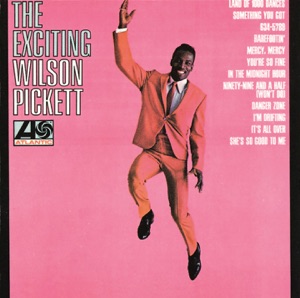
The Exciting Wilson Pickett
Wilson Pickett
Why listen
A forceful singer and precisely placed instrumental replies make each other sound larger.
Listen and read
Tracks · previews
English editorial edition
Album story
Tracks one and seven make an illuminating pair of entrances. Land of 1000 Dances and In the Midnight Hour opened the two sides of the LP, each putting Wilson Pickett’s voice in a different rhythmic setting. Follow what the band leaves available for him. The excitement grows from when a phrase arrives as much as from how loudly it is sung.
The twelve-song Atlantic album appeared in 1966 and brings together work from different recording settings. In the Midnight Hour was made at Stax in Memphis in 1965; Land of 1000 Dances belongs to Pickett’s FAME recordings in Muscle Shoals, Alabama. The voice provides continuity across those collaborations, rather than documenting one uninterrupted studio event.
Two sides, two invitations
The original first side opens with Land of 1000 Dances, passes through Something You Got and 634-5789, and ends with You’re So Fine. In the Midnight Hour begins the second side. Those familiar entrances are useful, but the following songs matter too. Danger Zone, I’m Drifting and It’s All Over offer other positions from which to address a listener. Rather than retaining only the dance-floor favourites, follow the changes in vocal stance through the complete programme.
Ownership through performance
The record includes songs from other writers as well as Pickett collaborations. Steve Cropper and Eddie Floyd wrote 634-5789, a reminder that authorship and the voice through which a song is remembered are different questions. Pickett can lengthen an ending, cut it short or return to a phrase with a new emphasis. First follow the vocal as though singing along; then listen to the instrumental activity left behind it. The exchange reveals an exactness that a description based only on shouting would miss. Its physical energy depends on people making room for one another.
Return to the gaps
After the complete programme, go back to either side’s opening and listen around the vocal. A guitar or horn reply can keep tension alive while Pickett withdraws. The arrangement need not fill every space: a clearly defined gap can make the next syllable more striking. Compare the start of a sentence with its ending, then follow a single instrumental response. What initially seemed like unbroken force becomes a succession of decisions made by singer and band together. That precision is another reason to return.
The album through its tracks
Compare tracks one and seven, the original side openers, then follow the instrumental replies between vocal phrases.
Land of 1000 Dances
Begin with the repeated movement behind the voice, then listen for how Pickett places his brief calls against it. Their apparent size depends on that support. FAME’s official history identifies this recording with Muscle Shoals, so personnel or room descriptions from the album’s Stax recordings should not simply be transferred to it. A phrase that invites collective participation can also keep the music moving toward the next event. As an opener, the song establishes a way of hearing even a short vocal sound as a rhythmic action. Its energy may evoke performance in front of a crowd, but that impression is not evidence that this is a live recording.
Reference · FAME studio official: Wilson Pickett recording historyIn the Midnight Hour
Compared with the first side’s opener, this song offers another sense of the space available for a sentence. Listen around Pickett’s entrances, not only at them. The recording was made at Stax in 1965 and appears here at the start of the second side of a 1966 album. That distinction prevents the programme from becoming an imagined single-day session. The tension need not disappear when the singer pauses: guitar, horns and rhythm keep a place ready for the next phrase. Follow the words once, then make the intervening accompaniment your main focus. Pickett’s authority can be heard as an ability to make his arrival matter, rather than sheer volume.
Reference · Rhino / Stan Cornyn: In the Midnight Hour at Stax in 1965
Listen next
Compare The Dock of the Bay for another soul singer’s relationship with space inside a band arrangement.
The Dock of the Bay ↗References & editorial note
Written for English readers. Album facts are referenced below; listening suggestions are editorial interpretations. AI-assisted editorial review; not independently human-reviewed.
- Atlantic official 75th anniversary mono reissue: twelve-track programme · store.atlanticrecords.com
- FAME studio official: Wilson Pickett recording history · famestudios.com
- Rhino / Stan Cornyn: In the Midnight Hour at Stax in 1965 · www.rhino.com
- Rhino: 634-5789 writers and retrospective context · www.rhino.com
- Apple Music: twelve-track edition · music.apple.com