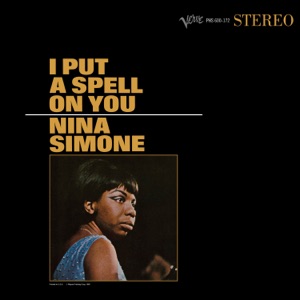
Soul / R&B / From rhythm and blues to soul · 1965
I Put a Spell on You
Nina Simone
Why listen
Orchestral scale never erases the small delays, changes of pressure and rhythmic decisions in Simone’s voice.
Listen and read
Tracks · previews
English editorial edition
Album story
The strings can fill the room, yet Nina Simone keeps control of its clock. On I Put a Spell on You, holding a note or leaving a phrase unfinished for a moment can be as consequential as an orchestral swell.
The title performance and Feeling Good are useful entrances, but neither represents the whole programme. Lighter movement, intimate pleading and an instrumental passage interrupt any expectation of continuous high drama. Listen for the changes of temperature between the songs.
A voice among arrangements
Released by Philips in 1965, the album credits Simone on vocals and piano, alongside arrangers and conductors Hal Mooney and Horace Ott. A single genre label does little to explain how these performances work. The movement of Tomorrow Is My Turn and the suspended feeling of Ne Me Quitte Pas offer different kinds of invitation. You need not understand every word to notice how long a phrase remains present, or when the accompaniment occupies the space after it. The voice is forceful partly because it does not surrender those decisions to the surrounding arrangement.
Remember the two sides
Gimme Some closes the original first side; Feeling Good opens the second. Pause between tracks six and seven to recover that change of scale. Later, One September Day and the instrumental Blues On Purpose redirect attention from the most imposing vocal moments. The absence of singing is productive: small exchanges between piano and rhythm become easier to follow. When a voice returns, it can register as part of an ensemble rather than a figure standing outside it. Stay through Take Care of Business instead of stopping after the familiar highlights.
Reception and the linked edition
The album reached number eighteen on the British album chart in 1965, evidence of its contemporary commercial reception. Apple Music’s later editorial celebrates Simone’s ability to reshape material across categories; that is a retrospective judgement, not a period review. The linked digital edition preserves the original twelve-song programme and carries a 2013 Verve copyright notice. Neither that date nor production claims made for a separate physical reissue should be mistaken for information about the original release or this digital master.
The album through its tracks
Pause after track six, then notice how the instrumental ninth track shifts attention away from the voice.
I Put a Spell On You
Follow the strings separately from the voice. Even when the accompaniment appears to announce the emotion, Simone can alter its timing by holding a note or reshaping an ending. The original liner notes describe her decision to place Screamin’ Jay Hawkins’s song against a ballad background. You do not need the earlier recording to hear the friction between an elaborate setting and a direct vocal presence. On a second pass, attend to the space after each short phrase rather than waiting for a climax. When the strings continue through a vocal pause, has the tension actually diminished? The performance makes emotional force something more precise than sheer volume.
Reference · Nina Simone official discography: original programme, credits and Roger Short liner notesFeeling Good
The opening voice seems to establish its own space before the arrangement expands around it. Once the horns give that space a larger outline, Simone still controls the weight of each phrase. Apple Music’s retrospective account identifies the performance as a transformed show tune: it need not be reduced to a literal autobiographical declaration. Listen first for the enlargement of the setting, then for the gaps the singer continues to leave within it. Exuberance does not require identical pressure on every line. Returning to the album sequence helps, too. Hear it after Gimme Some and compare two kinds of energy rather than treating this familiar recording as a self-contained anthem.
Reference · Apple Music: linked 12-song digital edition and retrospective editorial
Listen next
Compare Sam Cooke’s Ain’t That Good News for another voice negotiating emotion inside orchestral arrangements.
Ain't That Good News ↗References & editorial note
Written for English readers. Album facts are referenced below; listening suggestions are editorial interpretations. AI-assisted editorial review; not independently human-reviewed.
- Nina Simone official discography: original programme, credits and Roger Short liner notes · www.ninasimone.com
- Official Charts: I Put a Spell on You album, 1965 UK chart run · www.officialcharts.com
- Apple Music: linked 12-song digital edition and retrospective editorial · music.apple.com
- Nina Simone official store: Mastercut edition and original side divisions · shop.ninasimone.com