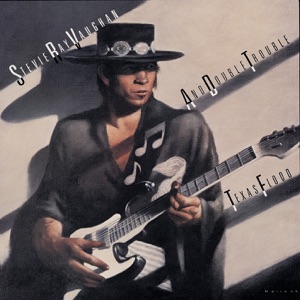
Blues / Contemporary blues · 1983
Texas Flood
Stevie Ray Vaughan and Double Trouble
Why listen
A propulsive shuffle and a spacious instrumental reveal how guitar, bass and drums change their jobs within the same trio.
Listen and read
Tracks · previews
English editorial edition
Album story
The force of Texas Flood depends on the floor beneath the guitar. Pride and Joy pushes a springy rhythm forward; the closing Lenny opens its chords more gently. The same three players do not occupy identical roles in both settings. Short songs, extended blues and adjacent instrumentals make differently sized frames for Vaughan’s guitar. Speed and density are possibilities within the programme, not its only measures of intensity.
Issued in 1983, the debut features Stevie Ray Vaughan on guitar and vocals, Tommy Shannon on bass and Chris Layton on drums. Instrumental sessions at Jackson Browne’s studio supplied the foundation. Engineer Richard Mullen later told Mix that the musicians played through their material in two sets without vocals, which were added afterward. The live-band feel and subsequent studio work are different stages of the record, not contradictory accounts of how it was made.
A compact opening pair
Love Struck Baby lasts about two minutes and twenty-four seconds; Pride and Joy follows in under four minutes. Only then does the title song expand beyond five. The sequence first establishes the trio’s forward movement rather than beginning with an extended demonstration. When the slower blues arrives, the guitar’s sustained bends occupy a noticeably different scale.
Two instrumentals together
After Tell Me come Testify and Rude Mood. Removing the vocal twice in succession does not make their functions identical. The balance between rhythmic attack and melodic movement shifts, while bass and drums keep that activity directed. Treating the passage as a guitarist’s isolated display misses the ensemble density that allows the leading instrument to change its emphasis.
A different final impression
Dirty Pool and I’m Cryin’ lead toward Lenny. Its unfolding chords leave a gentler instrumental conclusion than the earlier rapid movement might predict. Almost five minutes are available, but the ending need not spend them escalating a demonstration of technique. That final placement makes the harder attacks elsewhere feel like choices within a broader vocabulary. The record balances the compact propulsion of its entrance against a more extended melodic departure.
The album through its tracks
Compare the second-track shuffle with the final instrumental, following bass and drums as the guitar changes its approach.
Pride and Joy
The second track uses the roughly three-minute-and-forty-one-second studio recording. Guitar can move from clipped rhythmic strokes into a more forward melodic role without losing the spring of the underlying pattern. Mullen’s account of recording the instrumental material in set-like runs helps explain the value of familiar ensemble movement, while keeping the later vocal work distinct. In the finished song, bass and drums maintain direction as the guitar changes jobs around the voice. The slower title track follows, making this compact momentum an important point of contrast in the opening sequence. Its identity rests as much on collective rhythmic elasticity as on the instantly recognisable guitar sound.
Reference · Mix: direct Mullen, Shannon and Clapp recording testimonyLenny
The final track is the roughly four-minute-and-fifty-seven-second studio instrumental. Broader chords and a gently connecting melody give bass and drums a different setting from Pride and Joy. The absence of singing does not require the guitar to fill every available moment with faster notes. Sustained sound becomes part of the form. Remembering Testify and Rude Mood makes the difference especially clear: the instrumental category contains more than one expressive purpose. Placement matters too. Instead of closing with a harder version of earlier attacks, Lenny changes the record’s final impression. This selection preserves that original album ending rather than substituting an extended later concert performance.
Reference · Qobuz: current Epic original programme and credits
Listen next
Continue with Otis Rush’s Right Place, Wrong Time for another meeting of bent guitar notes and expressive blues singing.
Right Place, Wrong Time ↗References & editorial note
Written for English readers. Album facts are referenced below; listening suggestions are editorial interpretations. AI-assisted editorial review; not independently human-reviewed.