Classical / National schools · 1965
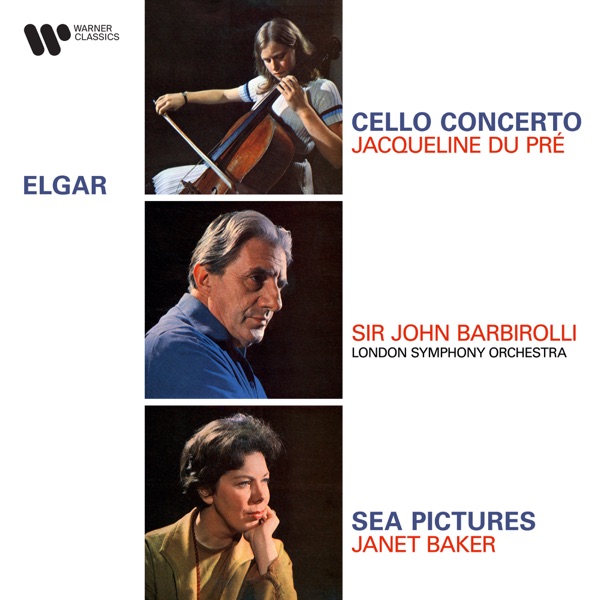
Elgar: Cello Concerto
Jacqueline du Pré / John Barbirolli
엘가: 첼로 협주곡 · 재클린 뒤 프레 / 존 바비롤리
Why listen
A firm opening declaration gives way to long-breathed song. Du Pré’s cello and Barbirolli’s orchestra make this concerto more varied than its reputation for sadness alone might suggest.
Listen and read
Tracks · previews
English editorial edition
Album story
The cello steps forward with a commanding gesture, then another kind of speech emerges in a longer melody. Moving between that close solo voice and the larger orchestral space offers a direct way into Jacqueline du Pré’s Elgar. Listen to who takes over a phrase, not only to who plays loudest.
Elgar completed the concerto in 1919. This entry concerns du Pré’s 1965 recording with John Barbirolli and the London Symphony Orchestra, made decades later. Reissues may pair it with different works, so the performing credits identify the interpretation more reliably than a familiar-looking cover. The four movements offer changes of pace and character rather than one uninterrupted mood.
More than an autumnal atmosphere
Quick movement and the brief slow third movement provide a useful contrast. Later returns of earlier material give memory a role too. If you expect only sorrow, some of the music’s lightness and rhythmic firmness can pass unnoticed. On a first encounter, compare the cello’s forceful beginnings with the way a quieter phrase tapers. Those differences are available without learning the formal plan in advance.
Listen when the soloist steps back
Du Pré’s presence can hold attention so strongly that the orchestral responses recede. Deliberately follow one of those handovers. The ensemble can continue a thought or prepare space for another entry. A concerto then becomes more than a solo demonstration with accompaniment. Barbirolli and the orchestra participate in the conversation, while the ending of a sustained note may matter as much as the next dramatic attack.
Separate the premiere from the recording’s reputation
The 1919 premiere suffered from inadequate rehearsal. The Elgar Society’s account distinguishes Ernest Newman’s criticism of the performance from his praise for the work. A story in which du Pré simply rescued a rejected composition misses that distinction. Warner’s later presentation emphasises her lasting association with the concerto. Let that reputation prompt curiosity, but do not make her subsequent biography determine every phrase. The audible relationship between players remains a sufficient reason to return.
The album through its tracks
Compare the opening movement’s declaration with the short Adagio. Attend to how the cello begins and releases a phrase in each setting.
I. Adagio – Moderato
The opening cello declaration is memorable, but it does not prescribe the weight of everything that follows. Compare it with the longer melody and hear how the orchestra responds. The premiere’s rehearsal difficulties should also be distinguished from rejection of the composition: contemporary criticism could object to the playing while admiring the work. That context makes the later recording one interpretation within a history, rather than the beginning of the work’s value. For a first listen, retain the opening gesture in memory. Its return near the concerto’s end gives you a landmark. You can follow that relationship without accepting an inherited verdict about the recording before hearing it.
Reference · Hugh Macdonald: Boston Symphony Orchestra programme noteIII. Adagio
In this short slow movement, follow the continuation and release of a phrase instead of waiting only for a major event. Du Pré’s later life may affect listeners who know it, but the performance need not become a farewell written in advance. Listen to the sound being made and the space around it. The Boston Symphony’s programme note likewise cautions against reducing the concerto to its melancholy character. After trying this movement alone, place it beside the quicker music before it and the finale after it. A modest entry point becomes part of a larger contrast. Experienced listeners may find that small endings reward as much attention as dramatic peaks.
Reference · Hugh Macdonald: Boston Symphony Orchestra programme note
Listen next
Gould’s Bach places several lines within a single piano. After listening to cello and orchestra exchange phrases, try following a conversation that happens inside one instrument.
Bach: Goldberg Variations 1955 ↗References & editorial note
Written for English readers. Album facts are referenced below; listening suggestions are editorial interpretations. AI-assisted editorial review; not independently human-reviewed.