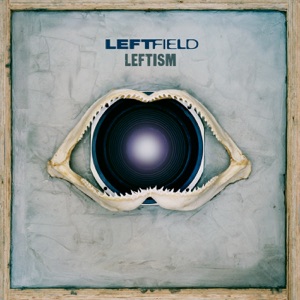
Electronic / Acid house & rave · 1995
Leftism
Leftfield
Why listen
Bass gives the album a common weight while contrasting voices and rhythmic surfaces keep changing the view.
Listen and read
Tracks · previews
English editorial edition
Album story
Leftism can feel solid underfoot and open overhead. A weighty low end holds the music together, but the surfaces above it keep changing: a spacious vocal passage, a busier weave of percussion, a softer interval. Leftfield make those contrasts the substance of an album rather than a diversion from its dance rhythms.
The official artist catalogue dates this debut to 30 January 1995 on Hard Hands / Columbia. The linked audio is the eleven-track 2017 remaster, preserving the original sequence without the extra remixes of expanded editions. Some durations, notably Melt and Song of Life, differ from the older timings on the artist page. The programme matches; identical mastering and track boundaries across every release are not assumed.
Remember the space between sounds
Keep the opening Release the Pressure in mind as Afro Left arrives, then notice the different breathing room of Melt. The comparison is useful without assigning every texture to a separate genre. Low frequencies can remain a point of continuity while the surrounding music changes how their weight feels. Follow that relationship through Song of Life rather than judging each track only by the size of its most forceful moment.
Different voices change the frame
The official retail account names Earl Sixteen on Release the Pressure, Djum Djum on Afro Left, Toni Halliday on Original and John Lydon on Open Up. Those appearances do more than supply recognisable names. Compare Original with Open Up and ask how each vocal meets the beat: does it seem suspended above the pattern, caught within it, or pushing against it? Vocal character helps give the album its changing scale.
Allow the ending to alter the journey
Black Flute leads into a substantial later stretch through Space Shanty, Inspection (Check One) and Storm 3000. Open Up is a powerful late arrival, but it is not the final destination. Continue into 21st Century Poem and hear the space left after that pressure. This is a reason to return to the complete sequence rather than only its familiar singles. The record can accommodate markedly different gestures while making the transitions between them part of its musical argument.
The album through its tracks
Compare the space around the bass across Release the Pressure, Afro Left and Melt before moving on to the later vocal tracks.
Release the Pressure
Release the Pressure establishes room around its weight. Listen to how the voice occupies the space above the low repeating figure, then how that space feels when the voice withdraws. The official retail description identifies Earl Sixteen’s participation; that credit need not be stretched into an identification of every vocal sound. This opening track runs about seven minutes forty seconds in the linked remaster. Follow one bass figure through a passage, paying attention to what disappears and returns around it. The arrangement can alter its apparent size without replacing its foundation. Carry that impression into Afro Left: the transition helps explain why this particular opening matters to the whole sequence.
Reference · Sony On Repeat: Leftism and guest vocalistsOpen Up
John Lydon’s vocal gives Open Up an abrasive edge, but the interaction with the repeating backing is more interesting than celebrity recognition alone. Hear where a sustained sound pushes across the beat and where a clipped phrase seems to catch its corners. The selected audio is the roughly seven-minute album remaster, tenth in the programme, rather than a short single edit. Shift your attention from the backing to the voice without changing volume; the perceived tension may change with that shift. There is no need to assign the words to a particular external event to hear this effect. Continue into 21st Century Poem to experience what follows the confrontation.
Reference · Sony On Repeat: Leftism and guest vocalists
Listen next
Underworld’s dubnobasswithmyheadman offers a useful comparison: hear how a recurring central voice and a changing cast of guests produce different relationships with electronic repetition.
Dubnobasswithmyheadman ↗References & editorial note
Written for English readers. Album facts are referenced below; listening suggestions are editorial interpretations. AI-assisted editorial review; not independently human-reviewed.