Folk / Country / Country essentials · 1980
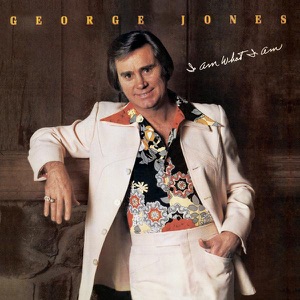
I Am What I Am
George Jones
Why listen
A celebrated tragic opener leads into compact songs that organise hesitation, regret and resolution in different ways.
Listen and read
Tracks · previews
English editorial edition
Album story
I Am What I Am begins with He Stopped Loving Her Today, but George Jones’s famous opening performance need not turn the remaining nine tracks into its shadow. The album finds several ways to make a short country song hold a story together, or keep a decision unresolved.
Released by Epic in 1980 and produced by Billy Sherrill, the record presents Jones as an interpreter of varied writing. The opener belongs to Bobby Braddock and Curly Putman; I’m Not Ready Yet is by Tom T. Hall. Convincing delivery does not make every song autobiographical. The linked Sony edition contains ten tracks, excluding the four bonuses of the expanded anniversary release. Its roughly twenty-eight minutes leave little room for an extended detour.
An ending changes the title
The opening song gives its title a different meaning when the man’s death is revealed. A spoken passage near the end also changes the means of telling the story. Jones does more than supply an emphatically sad tone. Even if you already know the outcome, follow the order in which information arrives. A performance must make that sequence work again, rather than relying entirely on a surprise that an experienced listener no longer needs.
A different use of repetition
The next songs move through ageing, blues and painful memory, but their shared concerns do not produce one uniform way of phrasing. At the sixth track, I’m Not Ready Yet makes postponement its recurring position. Compare that with the opener’s irreversible conclusion: one reaches an ending, while the other keeps refusing a decision. That difference gives repetition a different job and keeps the album from becoming ten demonstrations of the same familiar vocal texture.
Shorter scenes at the finish
After Good Hearted Woman, A Hard Act to Follow and Bone Dry close the programme in compact forms of around two minutes each. The album does not continually increase its scale or weight toward a final monumental ballad. These songs deserve their own place rather than being treated as leftovers after the famous opener. Within Sherrill’s controlled setting, attend to where a sentence turns while the accompaniment continues forward. The record’s concision makes those small structural choices unusually consequential.
The album through its tracks
Compare the opener’s finality with the recurring hesitation of track six, then hear the two short closing songs.
He Stopped Loving Her Today
At first the title could sound like an ordinary announcement that a relationship has ended. The story’s revelation of death gives the same words another meaning. Knowing the conclusion does not prevent a listener from following how information arrives, or how the spoken section changes the delivery near the end. Remember that Jones interprets a composition by Braddock and Putman; emotional conviction does not identify him with every character. Rather than measuring the intensity of sorrow, attend to the sequence that alters the meaning of a sentence. Continue into the next album track afterwards and consider what it means to place such a strong conclusion at a record’s very beginning.
Reference · Library of Congress: Cary ODell on He Stopped Loving Her TodayI'm Not Ready Yet
The sixth track uses refusal to decide where the opener moves toward an irreversible conclusion. In this Tom T. Hall song, listen to how a returning statement can carry both insistence and uncertainty. The performance need not be assigned to a particular decision in Jones’s private life. Its roughly three-minute shape holds attention by restating an attitude instead of building a long confession. The accompaniment can move forward even while the statement resists departure. Compare the two recommendations, then restore the intervening songs to their original positions. The album connects these different ways of handling time, and its sequence matters beyond the reputation of its best-known individual performance.
Reference · Qobuz/Epic: ten-track Sony programme, credits and durations
Listen next
Compare Tammy Wynette’s Stand by Your Man for another singer’s organisation of a sentence within Sherrill’s production.
Stand by Your Man ↗References & editorial note
Written for English readers. Album facts are referenced below; listening suggestions are editorial interpretations. AI-assisted editorial review; not independently human-reviewed.
- Library of Congress: Cary ODell on He Stopped Loving Her Today · www.loc.gov
- Country Music Hall of Fame: Bobby Braddock and Curly Putman authorship · countrymusichalloffame.org
- Qobuz/Epic: ten-track Sony programme, credits and durations · www.qobuz.com
- Apple Music: Sony original ten-song programme · music.apple.com