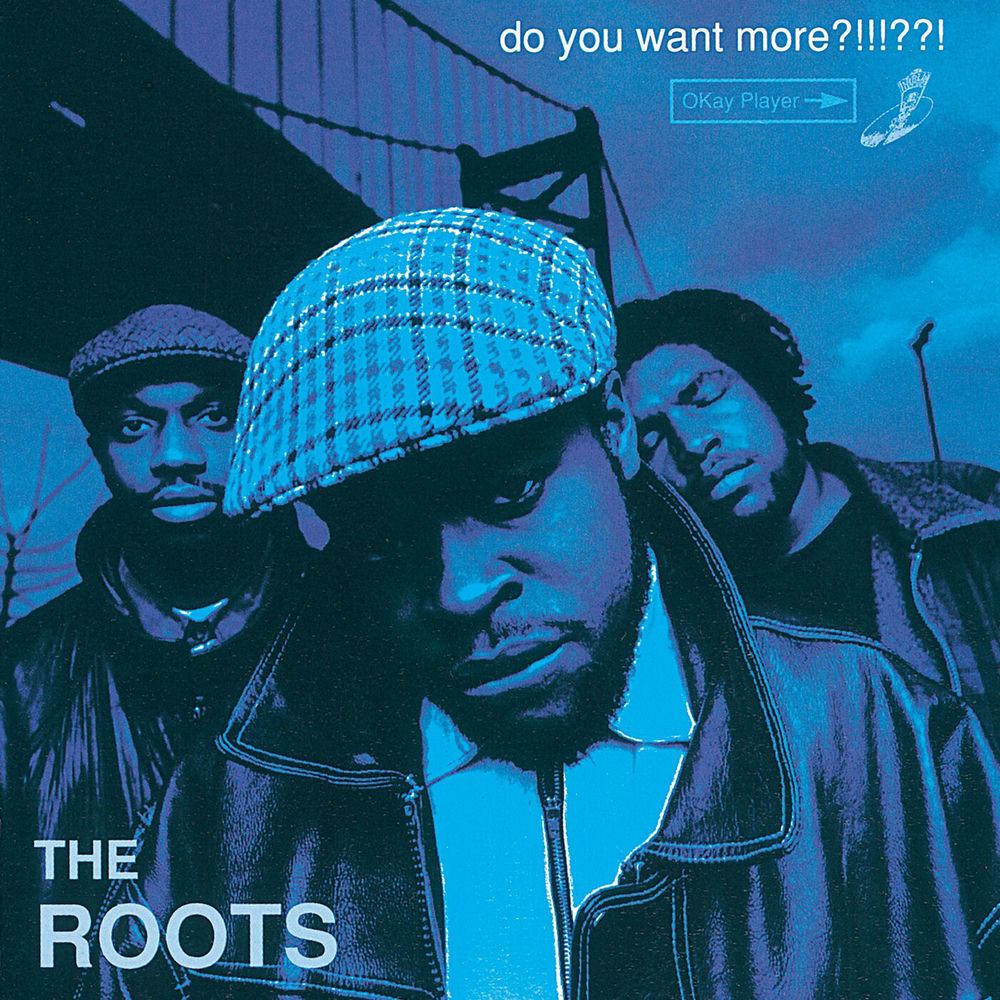
Hip-hop / Alternative & jazz rap · 1995
Do You Want More?!!!??!
The Roots
Why listen
The rhythm keeps moving through the spaces a rapper leaves behind.
Listen and read
Tracks · previews
English editorial edition
Album story
Wait for the end of a vocal phrase, then listen to what occupies the gap. Do You Want More?!!!??! makes that small shift of attention rewarding. The Roots let rap and instrumental movement inhabit the same space, so a relaxed surface can still contain a lively exchange of emphasis.
This Philadelphia group’s second album was also its major-label debut. The reference here follows the 1995 US release and the sixteen-track sequence from the introduction to The Unlocking. Anniversary editions later added remixes and alternate performances, which should remain separate from that programme. The band format is a useful listening clue, not evidence that played instruments make one form of hip-hop more authentic than another.
Speech as part of the beat
Black Thought and Malik B offer more to follow than speed or the amount of information packed into a line. Notice where a sentence finishes, how much space it leaves and how the next phrase enters. Those decisions can change the apparent motion of an accompaniment that continues beneath them. Listening this way brings the voice into the rhythm section without making the words irrelevant. It also avoids treating every instrumental detail as decoration added to an otherwise complete rap performance.
An album with changes of scale
Proceed and Distortion To Static give the opening stretch a clear outline. Farther in, ? Vs. Rahzel and Essaywhuman?!!!??! encourage attention to the sound of a voice, not just its verbal meaning. Keep those passages within the sequence rather than removing them as interruptions. Silent Treatment later supplies another point from which to reconsider the album’s apparently easygoing manner. A shared rhythmic ease does not require every track to occupy the same emotional position.
Following the reply
On a first pass, there is no need to identify every instrument. Choose the instant after a rapper stops and ask what moves next. On another pass, follow the vocal entrance into that same space. The exercise offers a concrete reason to revisit the record beyond its reputation as a jazz-rap landmark. Begin with Proceed, then extend the route into the more open middle passages and eventually to the final track. Sixteen pieces accumulate a sense of pacing that a couple of representative singles cannot fully supply.
The album through its tracks
Follow the space after a vocal phrase, then return to hear how the voice enters it.
Proceed
Follow a vocal phrase to its ending, then shift attention to the drums immediately around it. The accompaniment need not feel stationary simply because a rapper occupies the foreground. Proceed follows the introduction as the second item in the sixteen-track programme and lasts about four minutes and thirty-five seconds in this edition. Anniversary releases add differently named versions, including Proceed II; those are not the recording selected here. Compare a long verbal phrase with a shorter one before trying to catch every word. On a second pass, follow the low notes in those same places. Changing the object of attention can reveal how vocal pacing works inside a dependable repeating frame.
Reference · Apple Music: original-programme digital albumEssaywhuman?!!!??!
Hear the voice first as a shape in rhythm and pitch, then notice the scale of the instrumental response. The eleventh track lasts approximately five minutes in the selected programme. Its open manner does not by itself establish that everything was recorded in one uninterrupted take, and no such production claim is needed to enjoy the exchange. Alternate between following the vocal gestures and the instrumental movement around them. Keep the neighbouring tracks attached: does this passage halt the album’s momentum, or carry it through another kind of interaction? Placing it beside Proceed provides a practical comparison of what a voice can do when attention moves beyond the delivery of clearly formed sentences.
Reference · Apple Music: original-programme digital album
Listen next
A Tribe Called Quest’s Midnight Marauders offers a contrasting relationship between vocal pacing and repeating accompaniment.
Midnight Marauders ↗References & editorial note
Written for English readers. Album facts are referenced below; listening suggestions are editorial interpretations. AI-assisted editorial review; not independently human-reviewed.