Hip-hop / Hardcore & Wu-Tang · 1993
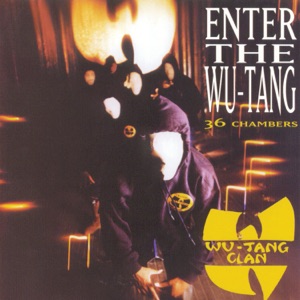
Enter the Wu-Tang (36 Chambers)
Wu-Tang Clan
Why listen
Alternating MCs and RZA’s sample construction make a collective debut whose shared setting preserves individual differences.
Listen and read
Tracks · previews
English editorial edition
Album story
Enter the Wu-Tang does not behave like a long solo performance with occasional guests. A change of MC can itself become an event in the arrangement. Several approaches to rapping enter a continuing beat, allowing the music to develop without replacing its entire background. Learning all nine names need not be the first assignment; noticing how the collective works is already a concrete way into the album.
Released in 1993, the debut features RZA, GZA, Ol’ Dirty Bastard, Method Man, Raekwon, Ghostface Killah, Inspectah Deck, U-God and Masta Killa. This selection takes the first twelve tracks of the explicit Expanded Edition, preserving the original CD programme and excluding its three bonus versions. The official vinyl sequence places Protect Ya Neck elsewhere, so it should not be treated as identical. Soul samples and martial-arts film excerpts help RZA establish a setting in which those different performers can meet.
A relay rather than a choir
A group performance need not depend on everyone delivering the same part together. In Protect Ya Neck, try attending to the transfer from one appearance to the next rather than immediately choosing a favourite rapper. Continuity in the beat can make the differences more apparent. A shared platform does not require an identical way of using it.
Film fragments inside the music
The sampled movie sounds are more than visual branding translated into audio. They can prepare an entrance or connect the atmosphere around a performance. Consider whether removing them would leave the same experience. Recognising every source is optional: first hear where each fragment sits within this record, then follow any reference that becomes interesting. The placement matters alongside the origin.
One familiar song, several designs
C.R.E.A.M. is a useful entrance, but its form cannot stand for every track. Method Man foregrounds one member’s name, while other pieces make collective succession particularly conspicuous. The final track returns to Wu-Tang: 7th Chamber in a second part. Keep that ending distinct from the three bonus versions that continue the expanded digital listing; the selected album programme stops after track twelve.
The album through its tracks
Compare the succession of MCs on Protect Ya Neck with the design of C.R.E.A.M., then restore both to the twelve-track CD sequence.
Protect Ya Neck
The changing performers provide a clear way to hear collective structure. On an initial encounter, the next rapper may arrive before the previous style has become familiar. Treat the handover itself as the first landmark instead of trying to pass a test of names. A continuing beat and changing delivery create different kinds of movement at once. There is no need to select a winning member in order to enjoy the complete performance. This is the tenth track of the chosen CD programme, separate from the Shao Lin Version appended to the Expanded Edition. Its placement also differs from the official vinyl listing, which offers another sequence rather than an interchangeable track order.
Reference · Sony Music: original members and 1993 debutC.R.E.A.M. (Cash Rules Everything Around Me)
A familiar title can open the album without becoming a formula for everything the group does. Hear how the recurring backing holds this song together, then consider the relationship between the rap sections and returning material. Musical structure and verbal detail can be explored in separate passes; neither has to be exhausted immediately. Alongside Protect Ya Neck, the track suggests that one collective can use more than one organising design. The selected version is the eighth track with its full backing, not the a cappella at the end of the Expanded Edition. Hearing isolated vocals could answer different questions, but it would not reproduce the experience of the arrangement presented here.
Reference · Sony Music: original members and 1993 debut
Listen next
Continue with Tupac’s All Eyez on Me, comparing successive members of a collective with the arrival of guests within a solo artist’s album.
All Eyez on Me ↗References & editorial note
Written for English readers. Album facts are referenced below; listening suggestions are editorial interpretations. AI-assisted editorial review; not independently human-reviewed.
- Sony Music: original members and 1993 debut · www.sonymusic.ca
- Sony Music store: twelve-title vinyl programme with different sequencing · shop.sonymusic.ca
- Library of Congress guest essay: production, original members and film samples · lcweb2.loc.gov
- Apple Music: explicit Expanded Edition, original CD sequence followed by three bonuses · music.apple.com