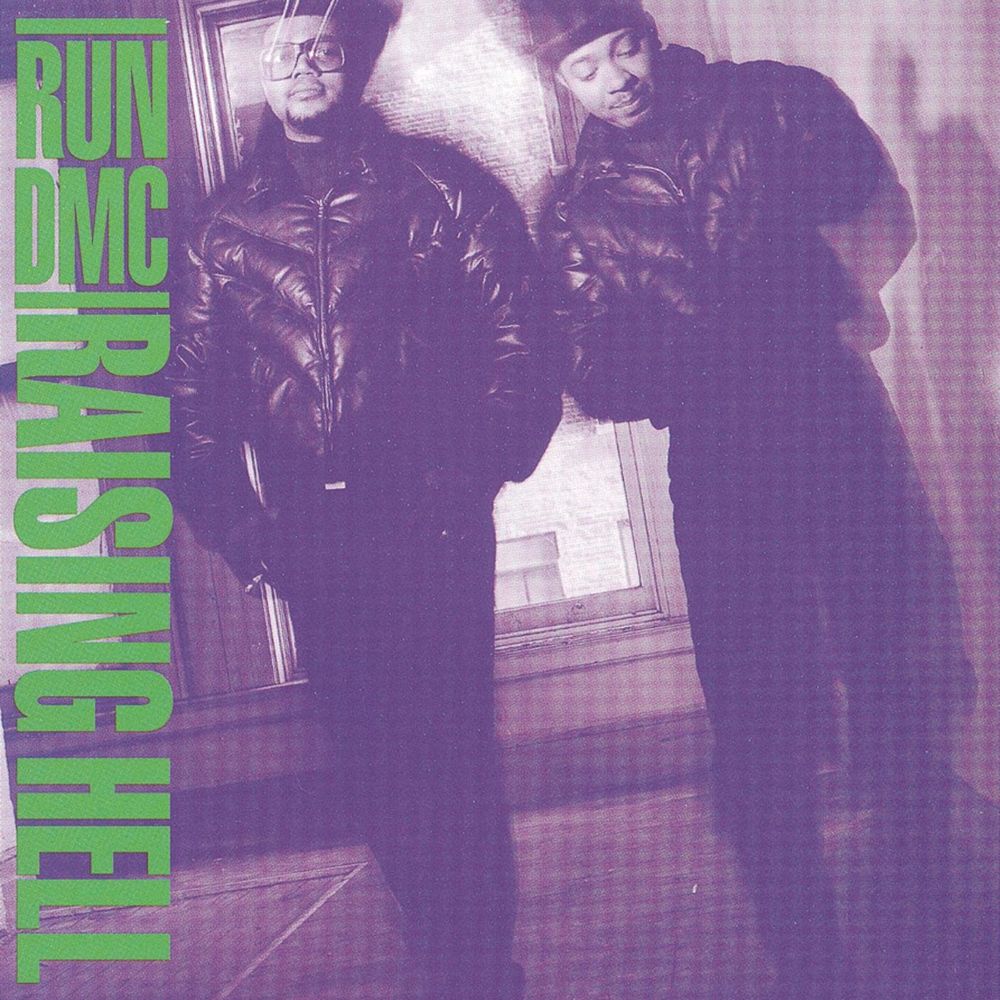
Hip-hop / Origins & old school · 1986
Raising Hell
Run-D.M.C.
Why listen
Follow the handovers between two rappers before concentrating on the famous rock collaboration. The pleasure starts with the speed of a conversation.
Listen and read
Tracks · previews
English editorial edition
Album story
Peter Piper offers an immediate way in: listen for one voice entering as the other finishes. You need not understand every phrase to notice the support, interruption and shared emphasis. Keep the repeating background in your attention for a moment, then return to the voices. The beat stays familiar while the lengths of their statements keep changing. It feels different from listening to one narrator hold the floor.
Raising Hell appeared in 1986 as the group’s third album. This linked edition contains the twelve-track programme, ending with Proud to Be Black, rather than the separate seventeen-track expanded version. Extra material can be interesting later. For a first visit, the original sequence makes it easier to hear how short interruptions and longer performances sit beside each other. No single hit needs to explain the whole record.
Use the familiar guitar as an entrance
If Walk This Way is already familiar, start there and keep its neighbours My Adidas and Is It Live in the listening session. The prominence of guitar changes, but the voices still organise your sense of forward motion. Rather than deciding where rock ends and rap begins, notice when your attention moves from a riff back to the placement of words. That small shift can be more useful than a genre definition.
Leave room for the gaps
On Perfection and Hit It Run, try listening between vocal phrases. An arrangement does not have to be crowded to feel forceful. A brief silence can make the next entrance seem larger. Comfortable volume is enough for this exercise. Nor must you identify every performer immediately: shared accents and changes of vocal weight can become familiar before names attach themselves to them.
Success is context, not an instruction
In a later Library of Congress guest essay, Bill Adler identifies Walk This Way’s US pop peak as number four. That is evidence of a particular contemporary success, not agreement about every track. The album’s 2017 preservation selection belongs to a later moment. Neither fact requires you to prefer the celebrated collaboration. If a shorter exchange attracts you more, return to it: the record leaves several different ways to enjoy its teamwork.
The album through its tracks
Compare the vocal handovers in Peter Piper with Walk This Way and the more exposed spaces of Perfection.
Peter Piper
Let the repeated background become a foothold, then follow the handover from one rapper to the other. A solo phrase, an interruption and an accent delivered together do different jobs. Apple’s album introduction also draws attention to this exchange. That observation offers a practical entrance without asking you to memorise a historical ranking. When repetition still feels active, it may be because you are anticipating the next voice. If the pace seems crowded, choose one background sound instead. Understanding every English expression is not a condition of enjoyment. Once you recognise a shared accent, listen again for the little gap immediately before it and the expectation that gap creates.
Reference · Apple Music: original twelve-track Raising Hell programmeWalk This Way (feat. Aerosmith)
A familiar guitar figure can be your starting point here. Next, notice how the same setting feels different when rapping gives way to singing. Bill Adler’s later account places the Aerosmith collaboration alongside its contemporary US pop peak of number four. Commercial success need not mean that differences between rock and hip-hop vanished; contrasting deliveries are part of the attraction. Listen to the final spoken phrase before the refrain and the first sound of the incoming voice. Follow whichever change is clearest to you: pace, weight or apparent distance. Continuing into Is It Live afterwards restores the collaboration to its place within a varied twelve-track album.
Reference · Bill Adler, Library of Congress guest essay: retrospective on Raising Hell
Listen next
Return to Run-D.M.C., their album from two years earlier, and compare the same voices in a sparer setting.
Run-D.M.C. ↗References & editorial note
Written for English readers. Album facts are referenced below; listening suggestions are editorial interpretations. AI-assisted editorial review; not independently human-reviewed.