Jazz / Early jazz & New Orleans · 1925–28
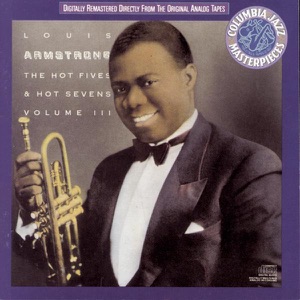
Hot Fives & Sevens
Louis Armstrong
Why listen
A crowded ensemble gives way to one clear line, then gathers around it again. These short recordings make individual personality and shared momentum equally inviting.
Listen and read
Tracks · previews
English editorial edition
Album story
Begin with the opening trumpet of West End Blues, then wait for the band to arrive. The pleasure is not only in a striking solo: it is in the change when other sounds enter its space. Heebie Jeebies offers another entrance, with a voice treating rhythm as something to play with. Neither approach requires a preliminary lesson in jazz history. Follow who comes forward, who moves around that person, and when your attention changes direction.
Hot Fives & Sevens names a body of recordings here, not a single album released in 1925 with one definitive running order. The dates 1925–28 refer to the recording period. Modern collections differ in their contents, and later recordings of a familiar title should not automatically stand in for these performances. Start with the two selections below rather than feeling obliged to complete an extensive box set. Check the recording information when choosing an external edition.
The band does not disappear
A prominent trumpet can make it tempting to treat everything else as background. Try reversing that habit on a second listen. Follow a lower line, or the activity around a phrase that is easy to remember. When space opens for one player, a solo becomes a change in collective attention, not simply an athletic feat. You can hear that change before you can name its musical components.
A history with more than one participant
Avoid turning these records into a story in which Armstrong invented jazz alone. Lil Hardin Armstrong and the other musicians belong in the picture. Gene Anderson’s research examines the recording project through its musicians and record-business relationships. For listening, ask a smaller question: what allows one person to stand out while the group still feels active? The answer can vary from passage to passage.
Short visits, returning attention
If the sound of an old transfer feels unfamiliar, choose a comfortable volume and one recording. On a return visit, listen where the featured voice or instrument rests. Anticipating the next entrance is already a form of involvement. Historical importance need not be an admission requirement: the changing pace of a phrase and the pleasure of a band coming together offer their own reasons to return.
The album through its tracks
Compare the vocal rhythm of Heebie Jeebies with the opening of West End Blues. Check recording dates and contents when selecting a compilation on an external service.
Heebie Jeebies
Listen to how the voice crosses the beat when words give way to syllables. This is scat singing: meaning need not come from a literal sentence. Gene Anderson’s Library of Congress essay describes the recording’s 1926 popularity and its role in spreading scat, without claiming Armstrong invented the practice. Rather than relying on a colourful origin story, follow the phrasing itself. Can a string of sounds still suggest a question, an answer, or a joke? Notice whether the instruments continue the mood when the voice stops. The combination of playfulness and timing offers a useful corrective to approaching early jazz only as a solemn historical obligation. A brief passage can reward a second visit.
Reference · Gene Anderson: Hot Five and Hot Seven Recordings, Library of Congress guest essayWest End Blues
Follow the trumpet alone at first, then notice where your attention goes when the ensemble enters. The Louis Armstrong House Museum dates this recording to 28 June 1928; its present reputation should not be confused with a survey of contemporary listeners. You can approach it without treating the opening as a technical examination. Does the force of the first statement continue unchanged, or do other entrances make room for a different kind of attention? Stay through the whole performance rather than stopping once you have recognised the celebrated beginning. Returning to that opening afterwards can change how you hear its promise: a brief invitation to a shared space, rather than a monument standing apart from the band.
Reference · Louis Armstrong House Museum: 1925–1928 timeline
Listen next
Continue with Jelly Roll Morton’s Red Hot Peppers Sessions. Comparing ensemble roles and organisation opens early jazz beyond the biography of any single celebrated soloist.
Red Hot Peppers Sessions ↗References & editorial note
Written for English readers. Album facts are referenced below; listening suggestions are editorial interpretations. AI-assisted editorial review; not independently human-reviewed.
- Gene Anderson: Hot Five and Hot Seven Recordings, Library of Congress guest essay · www.loc.gov
- Louis Armstrong House Museum: 1925–1928 timeline · www.louisarmstronghouse.org
- Gene Anderson: The Origin of Armstrong’s Hot Fives and Hot Sevens, College Music Symposium, 2003 · symposium.music.org
- Apple Music / Sony: The Best of the Hot 5 & Hot 7 Recordings, 2002 selection · music.apple.com