Jazz / Swing & big bands · 1958
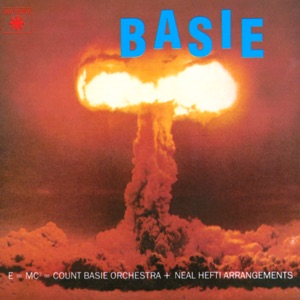
The Atomic Mr. Basie
Count Basie
Why listen
Precisely shared attacks and generous spaces make a large orchestra swing at both ends of the tempo range.
Listen and read
Tracks · previews
English editorial edition
Album story
The distance between the brisk opening and the unhurried final piece is part of this album’s achievement. Count Basie’s orchestra does not need to push at full volume throughout. Shared entrances, clean endings and a few well-placed piano notes can generate as much character as a massed brass statement.
Neal Hefti’s writing meets the Basie band in music recorded in New York in October 1957 and released in 1958. Originally known as Basie, the album is now widely identified by its Atomic title. Do not let that explosive image determine how every track should sound: keep the closing Lil’ Darlin’ in mind as you begin.
Writing that leaves room for voices
In a big band, the relationship between sections matters as much as the length of any individual solo. After The Kid from Red Bank, Duet and After Supper reveal smaller gestures within the same ensemble. Treat Hefti’s arrangement credit as a listening invitation: what sound is allowed to enter when a phrase finishes? Carefully organised passages and individual expression need not oppose one another. The precision of several players ending a note together is itself an expressive event, as memorable as the tune those notes describe.
The pulse survives a change of speed
The momentum of Whirly-Bird or Fantail does not simply disappear when the album reaches its slower conclusion. Lil’ Darlin’ exposes the ability to wait without losing the underlying movement. Hear whether your own sense of time continues through the spaces. In Splanky, a short recurring idea makes it possible to follow the addition and removal of instrumental layers. These contrasts suggest that excitement is not a synonym for speed. Weight, silence and collective timing all belong to the band’s vocabulary.
Awards and additional material
Basie won the Dance Band and Jazz Group performance awards at the first Grammys in 1959. Keep the 1957 sessions and 1958 album release distinct from that ceremony. The later Complete Atomic Basie adds five tracks to the original eleven; this edition follows the shorter programme. Let Lil’ Darlin’ register as an ending before exploring supplementary recordings. Later reissue commentary is valuable for edition questions, but should not be passed off as a contemporary review. For a first encounter, listen to the timing the players share rather than the prestige of a particular format.
The album through its tracks
Follow the sections ending notes together, then hear how a slow passage preserves its pulse.
Splanky
Hold on to the short recurring phrase and listen for the replies assembled around it. Repetition does not mean an unchanged weight: adding or removing a layer redirects attention. Follow the clearest line first, then concentrate on the sounds arriving as it finishes. Even when a soloist comes forward, the ensemble continues to shape the sense of time behind that voice. This interaction turns the precision of the arrangement into something physical rather than merely correct. You need not name the harmony to imagine a question and an answer. That imagined conversation is a listening aid, not a literal storyline. Notice the endings as carefully as the entrances.
Reference · Neal Hefti official catalogue: BasieLil' Darlin'
The slow close makes the band’s ability to wait unusually exposed. Do not follow only the sustained melody; try keeping the pulse through the spaces around it. Slowness does not mean the performance has stopped moving. It gives each arrival more room to be felt. Remembering the quick opening helps reveal how the same ensemble can organise time differently. Quietly entering and leaving together matters as much as the force of any single note. Its position as the final track is useful too: pause before adding bonus material, and allow this restrained conclusion to settle. Ease and concentration can be heard at the same time.
Reference · Neal Hefti official catalogue: Basie
Listen next
Compare Duke Ellington’s Anatomy of a Murder for another large orchestra turning concise replies and distinct timbres into character.
Anatomy of a Murder ↗References & editorial note
Written for English readers. Album facts are referenced below; listening suggestions are editorial interpretations. AI-assisted editorial review; not independently human-reviewed.
- Neal Hefti official catalogue: Basie · www.nealhefti.com
- Ermitage: 1957 sessions and 1958 release · www.ermitagerecords.com
- Recording Academy: first Grammy awards · www.grammy.com
- Vermont Jazz Center: original eleven tracks and 1994 expansion · library.vtjazz.org
- AllMusic: expanded edition review · www.allmusic.com
- Apple Music US: original eleven-track programme · music.apple.com