Film music / Jazz in film scores · 1958
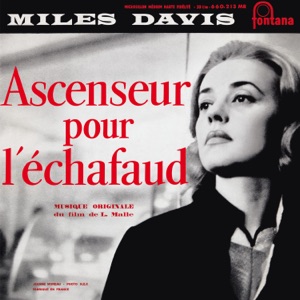
Ascenseur pour l'échafaud
Miles Davis
Ascenseur pour l'échafaud · 마일스 데이비스
Why listen
Follow the accompaniment when the trumpet stops. These short pieces offer an entrance through spacing and momentum, even without knowing the film.
Listen and read
Tracks · previews
English editorial edition
Album story
When the first trumpet phrase in Générique ends, stay with what continues underneath it. The lead instrument pauses, but the music has not stopped walking. You may hear loneliness, composure or simply room to breathe. No particular mood is compulsory. This is a useful soundtrack for noticing the space between statements rather than waiting for a memorable melody to return.
Louis Malle’s film appeared in 1958; the recording belongs to December 1957. Davis’s official archive describes an improvised session in Paris with Barney Wilen, René Urtreger, Pierre Michelot and Kenny Clarke. Those facts locate the encounter without requiring a theory lesson. The music can accompany a screen narrative and still offer a separate listening experience in short, self-contained stretches.
Do not let the opening predict everything
Try Sur l’autoroute and Au bar du Petit Bac after the quieter passages. Notice whether the rhythm changes where your attention goes. The trumpet need not remain the only foreground. A listener who does not recognise every instrument can still compare the pace and the amount of room between phrases. Translating every French title is optional; hearing the sequence change scale is already a way into the record.
A film connection without a plot examination
The official album archive praises the relationship between this music and cinema retrospectively. That is not a survey of the original audience, nor a box-office statistic. Hearing the record before watching the film lets you discover how images subsequently alter familiar sounds. Knowing the film first offers another route: put the remembered scene aside briefly and follow the exchange between accompaniment and solo voice. Neither approach is more correct.
Begin with ten, then investigate the alternatives
The basic programme listed by the official archive has ten tracks. The linked digital edition expands it to twenty-seven, including additional takes. Its recurring titles should not be mistaken for accidental duplication. Start with the opening ten as a compact sequence; return to alternatives when one piece has caught your ear. Comparing versions can then become a question about phrasing, not an obligation to collect differences. A short preview cannot demonstrate the complete pacing of a performance.
The album through its tracks
Start with the first ten tracks; treat the additional takes as a later visit rather than required homework.
Générique
Stay with the accompaniment after each trumpet statement. Does the silence in the lead part feel empty, or does the continuing pulse give it shape? As the opening of the official ten-track programme, this piece establishes a useful way of hearing the shorter scenes that follow. The archive describes an improvised production process, but that does not mean every sound arrived without preparation or intention. Nor does later recognition establish unanimous enthusiasm among the original audience. You can leave both the plot and the critical reputation outside for a moment. Compare the apparent distance between foreground and background here with the next piece, and let that change guide your listening.
Reference · Miles Davis official: original ten-track programme and retrospective assessmentAu bar du Petit Bac
Place this beside a quieter passage and notice how readily the rhythm draws your attention. Follow the supporting instruments rather than keeping the trumpet permanently in front. Ninth in the basic programme, it helps challenge the impression that this soundtrack offers only one shade of nocturnal melancholy. Its title supplies a location, not a definitive explanation of a character’s feelings. The documented meeting of jazz players is worth hearing as an ensemble encounter as well as film accompaniment. Continue into the final piece to experience the change of pace in context. You need not identify a scene correctly to hear the sequence doing something interesting.
Reference · Miles Davis official: original ten-track programme and retrospective assessment
Listen next
Continue with Bernard Herrmann’s Vertigo. Compare how a small jazz group and an orchestra make waiting and tension audible.
Vertigo ↗References & editorial note
Written for English readers. Album facts are referenced below; listening suggestions are editorial interpretations. AI-assisted editorial review; not independently human-reviewed.