Film music / New Hollywood · 1958
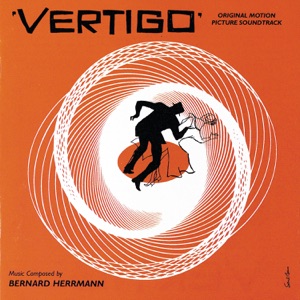
Vertigo
Bernard Herrmann
Vertigo · 버나드 허먼
Why listen
A melody seems ready to settle, then reaches further. Hear how close romantic warmth can come to unease.
Listen and read
Tracks · previews
English editorial edition
Album story
Try the opening without imagining a chase. As the short figures return, do you feel propelled forward or caught in a circle? Vertigo offers both possibilities. Its quieter passages also deserve attention: a smooth melody need not mean that everything is safe. You can enter this soundtrack without knowing the film’s revelations, simply by noticing when the music lets you relax and when it withdraws that permission.
Bernard Herrmann wrote the score for Alfred Hitchcock’s 1958 film. This link leads to the sixteen-track Varèse Sarabande edition carrying a 1996 copyright, not the shorter original LP programme. Craft Recordings explains that a musicians’ strike moved the recording sessions to London and Vienna, under Muir Mathieson. The composer’s prominent credit therefore should not be mistaken for a claim that he conducted these performances.
Give the smaller cues room
The Streets and The Forest may seem less inviting than a celebrated love scene. Yet their scale offers another way into the album. Follow how long a small gesture remains before something changes. A cue can stop with its scene rather than supply the satisfying ending of a song. Accepting those interruptions makes the sequence easier to inhabit; you need not turn every piece into a complete concert movement.
Beauty does not settle the question
Scene D’Amour can sound generous and increasingly urgent at once. The Los Angeles Philharmonic’s programme note places the music within the relationship between desire and obsession. That is useful context, not a compulsory emotional response. Without learning the plot in advance, you can hear how an apparent arrival becomes another extension. Compare what the title leads you to expect with what the pacing actually allows.
An album with a later history
The expanded 1996 presentation brought more of the original recordings into circulation than the brief 1958 album had offered. That continued attention is different from evidence of unanimous approval at the premiere. Start with the opening and the love music if the full sequence feels demanding. Later, fill the space between them with the smaller cues. They can make the record feel less like a collection of famous moments and more like a changing experience of anticipation.
The album through its tracks
Compare Prelude and Rooftop with Scene D’Amour. The linked sixteen-track expanded soundtrack is distinct from later concert rerecordings.
Prelude and Rooftop
Follow the returning short figures before concentrating on the largest orchestral gestures. Do they suggest momentum, confinement, or a little of each? Craft Recordings identifies recurring motifs as central to the score’s effect. You can test that idea without reconstructing the opening action shot by shot. This edition presents the original recordings conducted by Muir Mathieson, in an expanded 1996 programme, rather than a later concert performance under the composer. That distinction helps when comparing similarly titled releases. Listen through the quieter space before the next surge as well: the expectation of change can become as engaging as the change itself. A familiar film title need not dictate your response.
Reference · Craft Recordings: Vertigo original recording and 1996 restorationScene D'Amour
As the melody grows, notice when you expect it to arrive somewhere restful. An extension can make the same attractive sound feel more urgent. The LA Phil’s retrospective note connects this scene’s music with Wagner’s world of longing; you do not need to study an opera before hearing the effect. Keep the film’s revelations for the film and listen instead to the distance between anticipation and release. A love-scene title need not promise simple happiness. Returning to the opening afterwards offers a useful comparison: one passage circles in short gestures, while this one stretches out. Both can make waiting itself part of the listening experience, even without images.
Reference · LA Phil: Vertigo programme note, fear and desire
Listen next
Try Psycho next to compare another Herrmann score, where strings take a more concentrated role in shaping tension.
Psycho ↗References & editorial note
Written for English readers. Album facts are referenced below; listening suggestions are editorial interpretations. AI-assisted editorial review; not independently human-reviewed.