Film music / New Hollywood · 1960
The Magnificent Seven
Elmer Bernstein
The Magnificent Seven · 엘머 번스타인
Why listen
The pulse beneath the broad melody makes the score feel as though it is already moving.
Listen and read
Tracks · previews
English editorial edition
Album story
Listen below the famous tune. The short rhythmic gestures in The Magnificent Seven keep pulling forward while the melody stretches across them. Elmer Bernstein’s score offers more than a musical picture of open country: it can make time seem to move faster, giving a scene momentum before the image has explained everything.
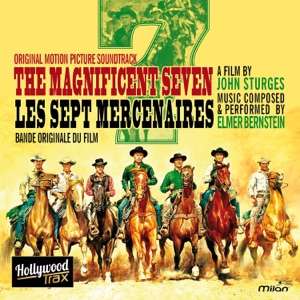
The year 1960 identifies the film and its score. The listening edition selected here is Milan’s 2015 digital release, labelled as the original motion picture soundtrack and containing twenty-three tracks. That distribution date is not the date of composition, and 1960 should not be taken as a verified release date for this album configuration. Later orchestral rerecordings and the music for the 2016 remake are separate objects.
A physical kind of pacing
In the composer note published by Wise Music, Bernstein recalled using music that moved faster than the action on screen to give the film drive. Treat that as an account of his intention, not a measurement that applies uniformly to every scene. A practical listening approach is to separate the broad tune from the shorter figures beneath it. Which layer seems to determine how quickly the passage is travelling? The pleasure of a memorable melody and the bodily effect of a persistent pulse can operate together.
Between the recognisable moments
The opening track combines Main Title and Calvera, while the programme places brief cues such as Quest and Fiesta alongside longer groupings. A streaming item therefore need not behave like a self-contained song. Listen around The Journey as well as to it. Changes in scale can make the returning foreground melody more effective; the less immediately familiar material is part of that preparation, rather than empty space between appearances of the theme.
Hearing a score as an album
No plot summary is required to follow movement, pauses and changes of emphasis. Anyone avoiding spoilers can also leave the track list unread, since some cue titles reveal events. What this edition offers is one composer’s response to the pacing of a particular film, not a definitive representation of the entire Western genre. Returning after knowing only the theme allows attention to expand from a celebrated passage into the surrounding architecture of the score.
The album through its tracks
Separate the broad tune from the shorter rhythmic figures underneath it.
Main Title and Calvera
Follow the broad melody once, then return to the shorter gestures beneath it. Changing attention can make a different layer seem to lead the same passage. This opening item lasts about three minutes and fifty-six seconds in the Milan edition and combines the main title with Calvera material, as its name indicates. It is therefore not interchangeable with a short concert arrangement of the principal theme. Remember the composer’s description of music supplying drive, but avoid inventing precise screen actions from sound alone. Find a point where the musical centre of attention changes. Does the energy continue in the same direction, or does another kind of tension take over after the familiar melody?
Reference · Apple Music: Milan 2015 original motion picture soundtrack editionThe Journey
Compare the apparent breadth of the melody with the smaller movements keeping time beneath it. The title need not become a test of how well you remember the characters’ route. This is track ten of the selected programme, lasting about four minutes and thirty-nine seconds, between Worst Shot and Toro. Hear it alone, then keep those three items together. The surrounding changes can affect where a long musical breath seems to begin and where it gives way to another scene. Instead of waiting only for a loud arrival, follow a shorter accompanying figure through the longer line. That offers a way to hear the score organising a listener’s time without retelling the film.
Reference · Apple Music: Milan 2015 original motion picture soundtrack edition
Listen next
Herrmann’s Psycho offers a contrasting way for orchestral choices to determine a film’s tension and pace.
Psycho ↗References & editorial note
Written for English readers. Album facts are referenced below; listening suggestions are editorial interpretations. AI-assisted editorial review; not independently human-reviewed.