Pop / Foundations of pop songwriting · 1970
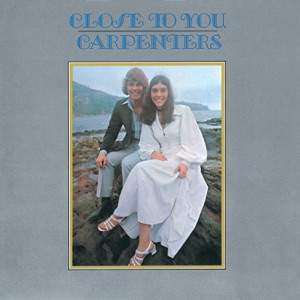
Close to You
The Carpenters
Why listen
The familiar ballads share this record with brisk changes of pace and a less predictable finale. Follow the moment a solitary voice becomes a layered vocal arrangement.
Listen and read
Tracks · previews
English editorial edition
Album story
Begin with Karen’s voice on We’ve Only Just Begun, then shift your attention to the voices gathering behind it. A seemingly private performance acquires a larger room. The brief, lively Love Is Surrender immediately changes the pace. If your picture of the Carpenters consists entirely of slow ballads, these opening neighbours offer a useful correction without requiring any specialist knowledge.
Released in 1970, Close to You was their second album. Universal Music Japan identifies its US album-chart peak as number two; the title single’s number one is a separate achievement. The linked digital edition contains twelve tracks in the album programme. It is neither a hits compilation nor a later orchestral remake. The 2017 date on the Japanese vinyl product page belongs to that reissue, not the original recording.
A familiar voice, different surroundings
Compare Reason To Believe with the Beatles song Help. The vocal warmth connects them, but the accompaniment does not have to support every sentence in the same way. Listen during a vocal pause: does an instrument fill the space or push towards the next phrase? There is more to follow here than a comfortable tone. You need not wait for a high note to notice a performance changing.
An ordinary advertisement, an unexpected opening
In his later recollection, Richard describes first encountering We’ve Only Just Begun in a bank television advertisement. The Nichols–Williams song travelled from a short commercial to the opening of an album. That history makes its familiarity less inevitable. It is an artist’s retrospective account, however, not evidence of how every listener received the record in 1970. Keep the modest starting point beside the expansive finished performance.
Leave the final track in place
Another Song takes a different route from the best-known singles. Richard connects it with his more adventurous arranging interests at the time. Rather than waiting only for a familiar refrain, follow what happens when instruments have room to continue beyond the vocal statement. You do not have to prefer this ending. Keeping it in the sequence simply allows the album to challenge the tidy image supplied by its two most familiar songs.
The album through its tracks
Keep the first two tracks together, then compare the title song with the finale. A short preview cannot represent the entire unfolding of Another Song.
(They Long To Be) Close To You
Notice the apparent distance between piano and singer at the opening. As the setting fills out, does Karen still seem to be addressing one person? This Bacharach–David composition was not a new Carpenter original. Richard’s retrospective account describes Herb Alpert bringing it to their attention; their recording became their first US number-one single in 1970. That distinction matters more than treating its eventual success as inevitable. Try hearing the familiar chorus as part of an arrangement rather than a tune you already know. The relationship between a recognisable individual voice and the surrounding layers can explain some of its appeal without reducing the whole record to a soothing sound.
Reference · Richard Carpenter: Close to You album recollection and original creditsWe've Only Just Begun
Listen before the familiar refrain arrives. The restrained beginning gives the horns and additional voices somewhere to take the performance. Richard later recalled hearing the song in a bank television commercial: the route into popular memory began in a surprisingly everyday setting. That does not prove it was written to represent an entire generation. Its suggestion of a new beginning is enough context for noticing how the sound opens outward. Continue into Love Is Surrender afterwards. The shorter, quicker song changes the scale of what you have just heard. Hearing that transition restores an album sequence often lost when a famous recording is encountered on its own.
Reference · Richard Carpenter: Close to You album recollection and original credits
Listen next
Continue with Dusty Springfield’s Dusty in Memphis. Compare how a close vocal presence meets a fuller arrangement, and how the rhythm changes your sense of the singer’s distance.
Dusty in Memphis ↗References & editorial note
Written for English readers. Album facts are referenced below; listening suggestions are editorial interpretations. AI-assisted editorial review; not independently human-reviewed.