Pop / 1990s pop · 1993
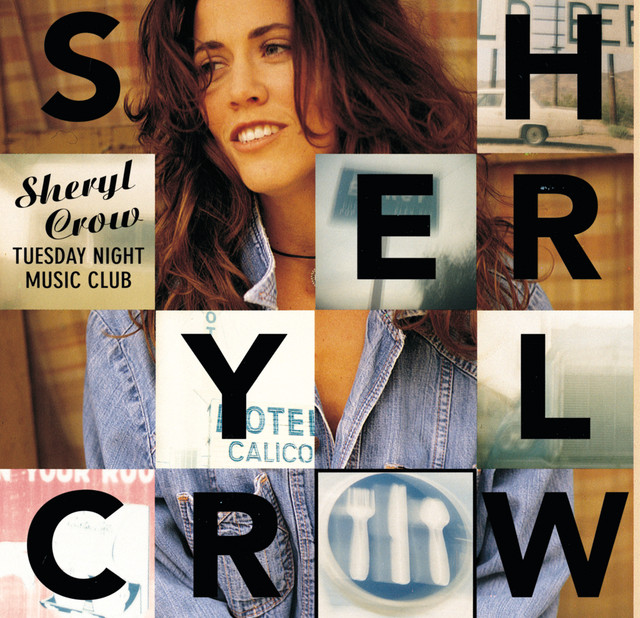
Tuesday Night Music Club
Sheryl Crow
Why listen
A collaborative debut moves from conversational hooks to a trumpet-led late turn, leaving room beyond its best-known hit.
Listen and read
Tracks · previews
English editorial edition
Album story
All I Wanna Do is easy to remember for its walking rhythm and conversational delivery. Tuesday Night Music Club has more to say after that familiar moment. We Do What We Can introduces a trumpet into the next track, and I Shall Believe gives the ending a longer reach. Placing the hit ninth allows two substantial songs to change the impression it leaves.
Released in 1993, Sheryl Crow’s debut was produced by Bill Bottrell. David Baerwald, David Ricketts and Kevin Gilbert were among the musicians involved in the community named by its title. Crow’s contemporary account welcomed their willingness to exchange ideas. The shared writing credits make collaboration visible even though one singer’s name appears on the cover.
Four different entrances
Run, Baby, Run opens with a broad melodic gesture. Leaving Las Vegas settles into a looser rhythmic gait, while Strong Enough narrows the scale around an acoustic guitar pattern. Can’t Cry Anymore moves forwards with a different brightness. The sequence establishes several textures immediately. Grain in the singing and an easily remembered chorus can coexist; the album does not have to choose one fixed level of polish or intensity.
Sentences become a chorus
Solidify and The Na-Na Song introduce more playful surfaces in the middle, before No One Said It Would Be Easy and What I Can Do for You add other kinds of weight. All I Wanna Do later draws on Wyn Cooper’s poem Fun. That origin encourages attention to its particular people and places. Its musical pleasure also lies in sentences flowing over the beat and then gathering into a compact, repeatable chorus.
What happens after the hit
Crow’s father Wendell plays trumpet on We Do What We Can, as the contemporary A&M biography specifies. This instrumental contribution changes the colour immediately after the familiar single. I Shall Believe then extends the final address through its recurring title. Both closing tracks last more than five minutes. Their generous proportions keep the album from shutting down at its most recognizable moment and make the ending part of its identity.
The album through its tracks
Follow the movement from conversational verse to chorus in All I Wanna Do, then hear the trumpet’s contribution in the following We Do What We Can.
All I Wanna Do
The album version lasts approximately four minutes and thirty-two seconds and sits ninth in an eleven-track sequence. Wyn Cooper’s poem Fun supplied material for the song, and his name remains among its writers. Words flow across the beat in the conversational verses before collecting into a more compact chorus. The continuing rhythm can therefore support a changing verbal surface. Hear the guitar’s short gestures alongside longer stretches of singing: an easy gait and a densely populated sentence can coexist. The song’s particular characters and setting give its brightness a scene to inhabit. Continuing into the next track also reveals how the album places this famous moment within a broader ending.
Reference · AGNI: Wyn Cooper author biography and Fun adaptationWe Do What We Can
Immediately following All I Wanna Do, this tenth track lasts approximately five minutes and thirty-nine seconds. A&M’s April 1994 biography identifies the trumpet player as Crow’s father, Wendell. That specific contribution gives the instrumental line a human place within the collaboration. The emphasis moves away from a compact chorus towards the weight shared by sung and instrumental phrases. A new colour enters the guitar-and-rhythm setting without breaking the record into an unrelated world. Its generous duration also prepares space for I Shall Believe. Hearing the final two tracks together shows how much of this debut’s character remains after its most recognizable song has finished, rather than treating that hit as the destination.
Reference · A&M April 1994 press biography, reproduced original document, page 1
Listen next
Continue to Gillian Welch’s Time (The Revelator), comparing the organization of songs through a larger collaboration and through an intimate performing partnership.
Time (The Revelator) ↗References & editorial note
Written for English readers. Album facts are referenced below; listening suggestions are editorial interpretations. AI-assisted editorial review; not independently human-reviewed.
- Sheryl Crow official discography: original eleven-track order and release date · sherylcrow.com
- A&M April 1994 press biography, reproduced original document, page 1 · www.onamrecords.com
- AGNI: Wyn Cooper author biography and Fun adaptation · agnionline.bu.edu
- Qobuz: eleven-track album, credits and durations · www.qobuz.com
- Apple Music: current US eleven-track album · music.apple.com