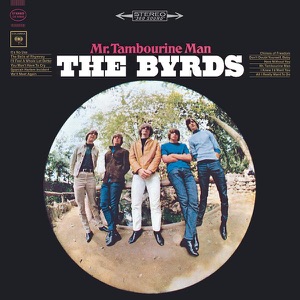
Rock / British Invasion & 1960s pop rock · 1965
Mr. Tambourine Man
The Byrds
Why listen
Hear a bright guitar carry feelings that the voices leave unresolved.
Listen and read
Tracks · previews
English editorial edition
Album story
The opening guitar seems to sparkle in place while the beat keeps moving. When the singing arrives, it sounds less excited than the instrumental surface. That small mismatch is a useful entrance to the Byrds: brightness need not mean uncomplicated happiness. The second song makes the point again through a different kind of emotional departure.
Released in 1965, this Los Angeles debut puts folk material into compact electric arrangements. Four Dylan songs provide one strand; Gene Clark’s writing gives the record an intimate counterweight. Listen beyond the famous title and the album becomes a sequence of changing distances, with voices sometimes drawing close and sometimes seeming to hover above the instruments. Its short songs leave room for those contrasts without requiring extended solos.
A sound with several edges
Roger McGuinn, then known as Jim, plays an electric twelve-string guitar. Its paired strings produce overlapping tones: follow the lingering ring after an attack rather than trying to count notes. Vocal harmony adds another outline around the melody. Together these details can make a small arrangement feel unusually spacious. They also let an apparently brisk song retain a reflective mood; the rhythm does not dictate everything the singer feels.
Follow the programme past the hit
Try the inward mood of “Here Without You” beside the broader sweep of “The Bells of Rhymney”. Later, “Chimes of Freedom” opens a longer space before “We’ll Meet Again” closes the original programme. This is a listening route, not a claim that every song tells one continuous story. Notice how the same instrumental vocabulary can frame different kinds of address, from personal uncertainty to an outward-looking farewell.
Success and a second life
The album reached number seven in Britain in 1965, a documented contemporary commercial response. Apple Music’s present-day editorial appreciation is retrospective, not a review from that summer. The linked Sony edition carries a 1996 copyright and eighteen tracks: twelve in the original programme, then six additions. Pause after track twelve on a first visit. Alternate performances can be illuminating later, once the familiar version provides something specific to compare.
The album through its tracks
Compare the emotional temperature of the guitar and voices, then pause at the end of track twelve.
Mr. Tambourine Man
Follow the circular guitar figure against the forward beat, then switch your attention to the comparatively unhurried vocal. In his later FAQ, McGuinn recalls selecting one verse from Dylan’s longer song and adding the instrumental opening. His account also identifies a session-player backing assembled by producer Terry Melcher; McGuinn was the only Byrd playing an instrument on that session. This is a detail about this recording, not a description of the whole album. The practical listening question is how the busy instrumental surface leaves room for the voice. Let the guitar’s ringing notes recede into the background on a second pass and hear how little the singer has to push to remain at the centre.
Reference · Roger McGuinn: Byrds FAQ, firsthand arrangement and session accountI'll Feel a Whole Lot Better
Placed immediately after the title song, Gene Clark’s composition changes the emotional subject without abandoning the bright guitar language. Listen for the tension between a buoyant pulse and the effort involved in leaving a relationship. The refrain can suggest confidence, but you may also hear someone rehearsing a decision. Apple Music’s retrospective notes emphasise Clark’s contribution alongside the Dylan material; this track makes that balance easy to investigate. Follow the instrumental spaces between vocal phrases instead of treating them as pauses before the next words. The reissue includes an alternate version later on. Start with track two so that any subsequent comparison has a clear reference rather than becoming a search for an automatically superior take.
Reference · Apple Music: 1996 reissue, programme and retrospective editorial
Listen next
Continue with the Beatles’ Revolver to compare how guitar and vocal textures reshape compact pop songs.
Revolver ↗References & editorial note
Written for English readers. Album facts are referenced below; listening suggestions are editorial interpretations. AI-assisted editorial review; not independently human-reviewed.
- Apple Music: 1996 reissue, programme and retrospective editorial · music.apple.com
- Roger McGuinn: Byrds FAQ, firsthand arrangement and session account · www.ibiblio.org
- Official Charts: album chart history, 1965 · www.officialcharts.com
- MusicBrainz: 1965 stereo LP sequence (programme only; personnel not used) · musicbrainz.org