Soul / R&B / Philadelphia & sweet soul · 1972
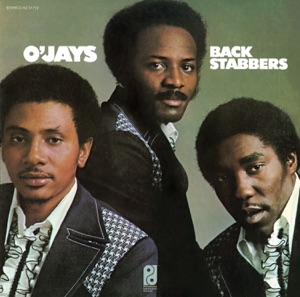
Back Stabbers
The O'Jays
Why listen
A record that places distrust and collective hope within one carefully varied programme, rather than asking either hit single to explain everything.
Listen and read
Tracks · previews
English editorial edition
Album story
Back Stabbers ends with Love Train. The apparent contradiction is a useful entrance to the O’Jays’ 1972 album, but it is not the whole journey. Between the famous singles lie longer songs, questions and arguments. Starting with When the World’s at Peace and reaching the brief final invitation gives those opposing attitudes room to coexist.
Eddie Levert, Walter Williams and William Powell were not making a debut. This was a major Philadelphia International turning point for an established group. Nor should the production partnership erase differences in songwriting: the title song credits Gene McFadden, John Whitehead and Leon Huff, with Thom Bell arranging; Love Train belongs to Kenny Gamble and Huff. The shared sound includes distinct contributions.
Drama before the first voice
Huff told Fresh Air that he played the opening piano of Back Stabbers and intended its gesture to reflect the subject’s drama. Listen to that entrance before treating the strings as shorthand for comfortable luxury. Piano, rhythm and vocal arrival can establish a scene. The title song occupies the second position, following an opening track that already imagines peace.
Time spent between the singles
Who Am I lasts more than five minutes, while 992 Arguments opens the programme’s second half at approximately six minutes. Those expanses distinguish the album from a parade of compact singles. The transition out of Time to Get Down changes both scale and subject. Listen to the Clock on the Wall and Shiftless, Shady, Jealous Kind of People extend the attention to unsettled human relationships.
An invitation after suspicion
Love Train follows Sunshine and finishes in about three minutes. Its invitation need not function as a tidy cure for everything preceding it. The sequencing allows collective possibility to remain imaginable after private disappointment. Gamble’s interview description of orchestral countermelodies also suggests a listening approach: follow several musical lines, not just a luxurious frame around a principal voice. Each line can retain its own direction.
The album through its tracks
Follow the changing song lengths between the opening peace song, the second-track warning and the final invitation.
Back Stabbers
The second track lasts approximately 3:06. Huff’s account of playing the opening piano provides a concrete place to begin: consider the drama established before a singer enters. Then attend to the arrival of rhythm, strings and voices, rather than hearing the arrangement as a neutral cushion beneath a warning. Songwriting and arranging are different jobs here, credited to McFadden, Whitehead and Huff, and to Thom Bell respectively. Knowing those names is not a prerequisite for hearing the introductory gesture continue to color the song. Compare it with Love Train, but keep the intervening selections in view; this compact warning is not the album’s final conclusion.
Reference · Fresh Air — Gamble and Huff interview, piano and orchestral countermelodiesLove Train
Gamble and Huff’s song closes the original album in approximately 2:58. Its inclusive invitation contrasts with the title track, but the record need not become a simple story in which optimism solves suspicion. First hear the final transition from Sunshine, then connect the closing song with When the World’s at Peace at the beginning. Questions, arguments and waiting occupy the space between those outward-looking titles. The familiar refrain can therefore carry the complications of the programme rather than cancel them. Remember also that the album appeared in 1972, before the song’s major single success in 1973: its place in the sequence is part of its identity.
Reference · Qobuz — licensed Back Stabbers and Love Train personnel and songwriting credits
Listen next
Continue to the Stylistics’ debut to compare its concentrated high lead with the O’Jays’ group vocal identity within another Philadelphia soul setting.
The Stylistics ↗References & editorial note
Written for English readers. Album facts are referenced below; listening suggestions are editorial interpretations. AI-assisted editorial review; not independently human-reviewed.
- Philadelphia International Records — Back Stabbers original programme · www.soundofphiladelphia.com
- Fresh Air — Gamble and Huff interview, piano and orchestral countermelodies · freshairarchive.org
- Qobuz — licensed Back Stabbers and Love Train personnel and songwriting credits · www.qobuz.com
- The Quietus — Eddie Levert interview · thequietus.com
- Apple Music — ten-song Back Stabbers edition · music.apple.com