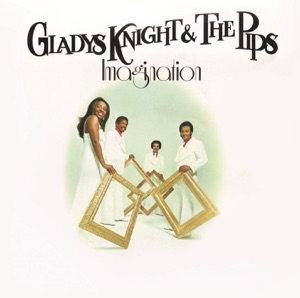
Soul / R&B / Philadelphia & sweet soul · 1973
Imagination
Gladys Knight & the Pips
Why listen
An album that lets a conversational vocal group move from a tightly told journey to an extended closing groove.
Listen and read
Tracks · previews
English editorial edition
Album story
The opening hit and the final original track occupy different kinds of time. Midnight Train to Georgia makes a story move through Gladys Knight’s lead and the Pips’ replies; Window Raisin’ Granny stays for more than six minutes. Hearing both ends helps prevent Imagination from becoming simply the album attached to a familiar single.
Released in 1973, this was the group’s first Buddah studio album after leaving Motown. Tony Camillo, Kenny Kerner and Richie Wise contributed production work, while the group also received co-production credits. Singing outside writers’ material does not make the performers passive. The programme combines Jim Weatherly songs with Johnny Nash’s I Can See Clearly Now and a closer whose writing credits include the group’s members.
A different stance immediately follows
I’ve Got to Use My Imagination comes directly after the opening journey. Compare the way each lead phrase sits against the rhythm rather than placing both songs in one category of sadness. Storms of Troubled Times and Best Thing That Ever Happened to Me then put difficulty and reassurance close together. The order need not describe one character’s continuous life to create meaningful changes of perspective.
Earlier release, later position
Where Peaceful Waters Flow was the group’s first Buddah single, yet it occupies sixth place here. Nash’s song and the concise Perfect Love follow. Chronology and album sequence therefore perform different jobs. An already released song can acquire new neighbors; a familiar composition can become part of another group’s identity. Keep the contrast between the short eighth selection and the lengthy finale in mind.
The long ending belongs to the group
Window Raisin’ Granny lasts approximately 6:12 in this edition, more than twice the duration of Perfect Love. It is not merely leftover space after the ballads. Shift attention from following a compact narrative toward the relationship between voices and recurring rhythm. Finish the nine-song original programme there before exploring the appended edits: the album ending and the demands of a shorter release become easier to distinguish.
The album through its tracks
Follow the Pips’ responses in the opener, then compare the longer group-centered ending and pause after track nine.
Midnight Train to Georgia
Select the approximately 4:39 album performance, not one of the later single, short or instrumental variants. Follow Weatherly’s story while keeping some attention on the Pips: an answer in a gap does something different from a voice reinforcing the lead. The relationship can make a narrated journey feel inhabited by more than one person. It is unnecessary to credit Knight alone with first inventing the altered title; the interpretive work here is the conversion of an existing song into this group’s conversation. Follow the placement of responses from the beginning instead of waiting only for the best-known phrase, and consider how they keep the narrative moving.
Reference · Recording Academy — Bubba Knight interview on Imagination and vocal arrangementWindow Raisin' Granny
The original ninth and final song runs approximately 6:12 here. Its writing credits include Knight and the Pips’ members, widening an impression of the album built exclusively around other writers’ ballads. Arrive through Perfect Love to feel how sharply the available space expands. Rather than summarizing a story, consider how the voices gather around or separate within the recurring rhythm. The bonus single version lasts roughly 3:50 and should not replace this extended conclusion. Comparing them need not establish that longer means better: an album ending and a compact standalone release can direct attention differently. Hear the complete original programme before letting the bonuses restart it.
Reference · Qobuz / Legacy — expanded edition licensed credits
Listen next
Continue to the O’Jays’ Back Stabbers to compare conversational voices with another group’s movement between tension and hope.
Back Stabbers ↗References & editorial note
Written for English readers. Album facts are referenced below; listening suggestions are editorial interpretations. AI-assisted editorial review; not independently human-reviewed.
- Recording Academy — Bubba Knight interview on Imagination and vocal arrangement · www.grammy.com
- Qobuz / Legacy — expanded edition licensed credits · www.qobuz.com
- Lescharts — original BDS-5141 programme and later editions · www.lescharts.com
- Apple Music — 2014 expanded programme and durations · music.apple.com