Reggae / Latin / Afrobeat & West Africa · 1999
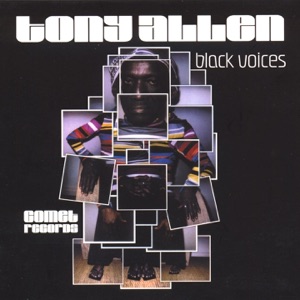
Black Voices
Tony Allen
Why listen
An Afrobeat drummer and a studio producer leave distinct signatures on the same recording.
Listen and read
Tracks · previews
English editorial edition
Album story
Black Voices makes repetition part of its architecture. Asiko opens the album and returns in a longer mix; the title track also appears twice. Those paired titles invite a different kind of attention from a sequence of seven unrelated songs. The versions occupy different positions, and their lengths help shape the journey.
Released in 1999, the record brings Tony Allen into a production relationship with Doctor L. Allen had helped develop the rhythmic language associated with Fela Kuti, but this album need not be treated as a smaller substitute for that earlier band. Electronic processing is central to its identity, and the writing credits also name Michael Clip Payne and Gary Mudbone Cooper.
A collaboration with friction
Allen later told Ransom Note that he recorded directly and Doctor L transformed the sound. His recollection was hardly a tidy endorsement: he expressed dislike for the production while acknowledging the opportunities it brought, including touring in America. That tension matters. Hearing the record as a perfectly agreed plan would erase the difference between the performer’s contribution and the producer’s decisions.
Returning to the material
After the opening Asiko, Get Together offers a shorter span before the lengthy Black Voices and The Same Blood. Asiko then reappears as In a Silent Mix, followed by the shorter title track. These are not accidental duplicate entries. Their placement makes the later part of the original programme a return to material already encountered, rather than a simple procession towards another new composition. Keep the sequence intact for that first comparison.
An album, not a single-author legend
Listen first to the six-track sequence before treating the additional Ariya as an extension. Then compare the two appearances of Asiko, particularly how each begins and closes. This gives the production question an audible shape without requiring technical vocabulary. Allen’s recollections also offer a useful caution: a recording can open new possibilities without every participant agreeing about its sound.
The album through its tracks
Compare tracks 1 and 5, then hear track 6 as the close of the original programme.
Asiko
The opening version runs about seven minutes and fifty-five seconds. Rather than waiting for a drummer’s showcase, attend to how the percussion sits among the other sounds and how the opening establishes a scale for the whole piece. Keep that impression when you reach Asiko again at track five. Its In a Silent Mix runs roughly a minute and a half longer, giving comparison a practical starting point. Different durations do not by themselves explain a mix, but they discourage treating the second entry as an identical file. The selection here is the opener; the later mix is a separate listening reference, not an alternative title for this recording.
Reference · Tony Allen / Comet — Black Voices official programme and creditsGet Together
At roughly five minutes and fifty-five seconds, the second track gives the opening stretch its shortest span. Both neighbouring pieces exceed seven minutes, so its position can be as useful an entry point as its title. Follow how the beginning leads towards the ending, then notice the change of scale on entering Black Voices. The album’s shared writing credits help prevent a misleading image of Allen creating every sound alone, although they do not allocate every individual part of this recording. There is no need to turn the title into a translated manifesto. Start with the proportion of the song within this particular sequence and let any interpretation follow from that.
Reference · Tony Allen / Comet — Black Voices official programme and credits
Listen next
Compare the track-specific guests on The Source with the producer and co-writers here, considering different ways collaborators reshape a leading musician’s work.
The Source ↗References & editorial note
Written for English readers. Album facts are referenced below; listening suggestions are editorial interpretations. AI-assisted editorial review; not independently human-reviewed.