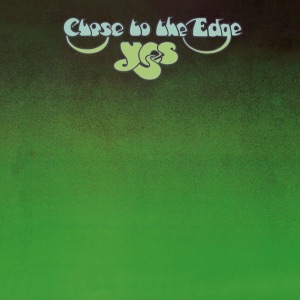
Rock / Progressive rock · 1972
Close to the Edge
Yes
Why listen
One side-long composition and two contrasting companions show that extended rock need not move at a single scale or pace.
Listen and read
Tracks · previews
English editorial edition
Album story
Three tracks might suggest a short record. Here it means that each piece has room to change its surroundings. The title composition occupies the original LP’s first side, while And You and I and Siberian Khatru share the second. Duration is only the starting point: returning material can feel different because of what has happened in between. Try comparing three beginnings rather than treating the album as an endurance test with one continuous level of complexity.
Yes made their fifth studio album with Eddy Offord at London’s Advision in 1972. Jon Anderson, Steve Howe, Chris Squire, Rick Wakeman and Bill Bruford form the performing group. Singing remains essential, but guitar, keyboards, bass and drums do more than provide a stable background. The chosen three-track standard distribution is linked by the band under its original-mix remaster discussion, distinct from later remix and live expansions.
A side becomes a composition
The title track’s four named sections remain one continuous track here. Instead of counting them as separate songs, hear what their connections accomplish. Dense ensemble activity, singing and broader keyboard textures give the same work different dimensions. You need not memorise every transition. When something becomes familiar again, ask how the intervening music has altered its effect rather than merely identifying its return.
Two further departures
The second side is not an appendix to the long opener. And You and I and Siberian Khatru offer different ways to start again. Compare the guitar and vocal entry into the second piece with the rhythmic propulsion of the third. A pause before the second track can recover the proportions of the LP even when digital playback removes the physical interruption.
Before solving every image
Understanding every lyrical image is not a prerequisite for hearing the construction. Follow the transfer of attention between voice and instruments, or move from the prominent singing towards bass or guitar. This creates a personal route through the longer form. After all three tracks, return to one transition that stayed with you; the album’s initially imposing dimensions may have become a specific remembered experience.
The album through its tracks
Hear the title composition continuously, then compare how the second and third tracks establish fresh beginnings.
Close to the Edge
Four section names do not turn this into four independent songs. Hearing them separately can lose the effect of an earlier experience changing a later scene. Compare dense ensemble activity with the arrival of singing and the expansion of keyboard space. Rather than ranking the most difficult passages, notice whether an instrument takes a different role after a transition. On a first encounter, remembering a single distinctive sound is enough. At the end, consider the surroundings through which that memory has travelled. The selection is the complete title composition, not a single edit of Total Mass Retain or a later concert performance with a different balance and trajectory.
Reference · Yes official discography: original-mix remaster and standard editionAnd You and I
After the title track’s long route, notice how guitar and singing provide somewhere to begin again. This piece also has four named sections, but their number does not imply four unrelated songs. Remembering the smaller opening as the ensemble broadens can make the change of scale more apparent. Try following the roles of keyboards and guitar separately from the voice, and ask what preserves continuity across different scenes. There is no requirement to respond in exactly the same way as to the title track. Continue into Siberian Khatru afterwards to hear this piece’s position as the beginning of the second side. The chosen track includes all four sections.
Reference · Yes official discography: original-mix remaster and standard edition
Listen next
Return to King Crimson’s In the Court of the Crimson King and compare long connections within three pieces with contrasts across five separate tracks.
In the Court of the Crimson King ↗References & editorial note
Written for English readers. Album facts are referenced below; listening suggestions are editorial interpretations. AI-assisted editorial review; not independently human-reviewed.